
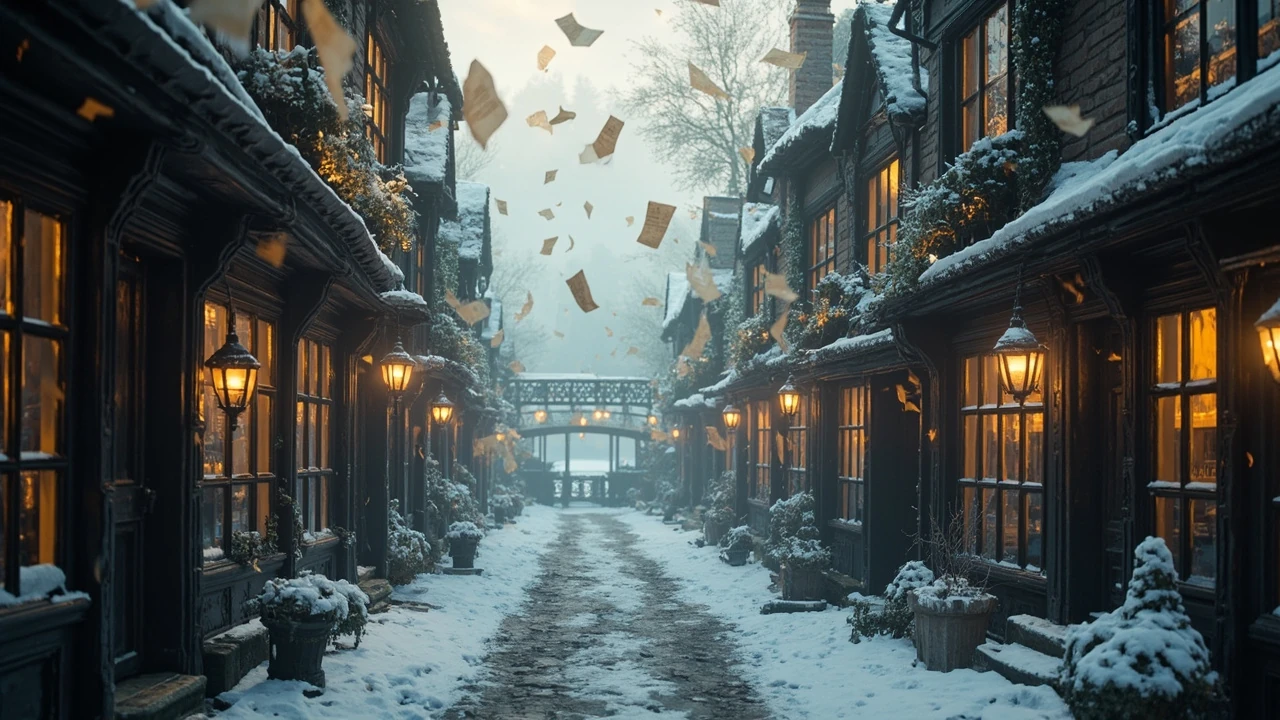
Hogsmeade field guide pages: where to start in Hogwarts Legacy
Hogsmeade is the largest single location cluster of collectibles you will visit in Hogwarts Legacy, and the Hogsmeade field guide pages are the entry point most players use to learn how the entire collectible system behaves. The village alone contains 55 pages, scattered between shop interiors, rooftops, the riverside, and the central square. Once you understand how Hogsmeade works, the same patterns transfer directly to every hamlet, ruin, and Highlands landmark in the rest of the game.
The pages exist for a reason: each one grants Field Guide XP, which feeds your overall level and therefore your power curve. That makes Hogsmeade a high-value first stop, not just a story beat. Below is a complete walkthrough built around verified in-game mechanics and a verified Hogsmeade reference list, plus the production-thinking notes that show why a developer would design collectibles this way.
Why Hogsmeade field guide pages matter for your playthrough
Field guide pages are the quiet backbone of Hogwarts Legacy’s progression economy. Unlike quest XP, which is granted in spikes, field guide XP is delivered as a slow, predictable drip across the open world. That design choice is deliberate. A studio that wants players to explore every building and rooftop needs a reward that compounds without feeling like grinding, and a per-page XP grant is the cleanest way to deliver that.
From a player’s perspective, the practical effects are simple: more pages means more levels, more talent points, and more breathing room in the harder main-story fights. The Hogsmeade cluster, with 55 pages concentrated in a small radius, gives one of the largest single-map XP payouts in the game. Spending an hour in the village after first unlocking it is more efficient than wandering the Highlands blind.
From a production perspective, Hogsmeade also acts as a tutorial. The village’s collectibles are a controlled sample of the tricks used across the rest of the map: Accio pickups, Revelio reveals, Alohomora locks, and fly-through pages. Once you have read every page in Hogsmeade, the rest of the world stops feeling like guesswork.
Unlocking Hogsmeade and the prerequisite spells
You cannot walk into Hogsmeade at the very start of the game. The village unlocks shortly after you join your house and complete the first short story beat that introduces the wider world. Once the south bridge is open, Hogsmeade becomes a free-fast-travel destination for the rest of the game.
Inside the village, several Hogsmeade field guide pages require spells you will not own on day one. The most important to plan for are:
- Revelio: the basic reveal spell used to highlight pages through walls and floors. Without it, dozens of pages look invisible.
- Accio: a line-of-sight pull that brings a flying page to you, including pages loop-the-looping on the ceilings of Tomes and Scrolls and the rafters of Madam Snelling’s.
- Alohomora: required for the level 1 lock on the top floor of the Three Broomsticks. You do not get this spell until you progress past The First Trial in the main story and complete Mr Moon’s associated quest, so the door page is correctly blocked by design, not by a bug.
- Lumos: optional but useful in the darker corners of Ollivanders, the back alley near the Hog’s Head, and inside Zonko’s Joke Shop.
If a page refuses to appear, the cause is almost always one of these four spells, not a glitch. A quick spell check is the first diagnostic step before you assume a page is missing.
The three page types you will find in Hogsmeade
The verified reference for Hogsmeade groups every field guide page into three categories. Knowing which type you are chasing saves a lot of wandering.
| Page type | How it is hidden | Main counter-spell | Common Hogsmeade example |
|---|---|---|---|
| Static display | Resting on furniture, signs, walls, or counters | Revelio | Page on the potions desk inside J. Pippin’s Potions |
| Conjured or animated | Floating, looping, or triggered by a nearby object | Accio, Levioso, or a contextual interaction | Looping page above the high ceiling of Tomes and Scrolls |
| Locked or environment-gated | Behind a lock, a one-way passage, or a story-gated shop interior | Alohomora or story progression | Top floor of the Three Broomsticks, behind a level 1 door |
The three-type split is not just a presentation choice. It mirrors the way the broader open world divides its challenges between observation, interaction, and gating. Once you internalise the categories, the same taxonomy applies to every hamlet, castle wing, and ruin you visit later.
Walking the village: an ordered route through Hogsmeade field guide pages
The order below follows the village from the south bridge northward, then loops back along the riverside and through the back alleys. It is designed so that you only enter each building once, and so that any story-gated pages are reached at a sensible point rather than at the end of a long detour.
South bridge approach and Tomes and Scrolls
As you cross the south bridge, look for a page at the base of a lamp post just to the left of the bridge entrance. This is the easiest of the Hogsmeade field guide pages and a good first collection to confirm the system is working. Move up the main street to Tomes and Scrolls on the left. Inside, an enchanted staircase reveals itself when a particular book is moved, and a second page is flying in tight loops high above the shop floor, which Accio will bring down. Both are good practice for the animation type pages that dominate the rest of the village.
Main street cluster: Ceridwen’s, Ollivanders, and the Hog’s Head
Just past Tomes and Scrolls, on the right of the main street, is a precariously stacked pile of cauldrons outside Ceridwen’s. A page sits with the stack and reads as an obvious tutorial marker. Continue up the main road to the fork and look left for Ollivanders, where the wands-in-the-window page is your target. Back-track toward the West Hogsmeade Floo Flame and head down the back alley roads to the Hog’s Head pub. The mounted hog’s head sits right behind the front counter, and a second riverside page is hidden near a large cask and crates on the docks behind the inn.
West Hogsmeade garden, J. Pippin’s Potions, and the Three Broomsticks
Across the small road from the West Hogsmeade Floo Flame, a community garden sits on a small incline behind a row of houses. A page is waiting there. From the garden, cross to J. Pippin’s Potions on the west side of the village and use Revelio by the potions desk to pull the page into view. Finish the cluster with a walk to the center of Hogsmeade and up to the Three Broomsticks, where the fireplace page reveals under Revelio. The pub’s top floor contains an Alohomora-locked door with a page, a Demiguise Statue, and a Conjuration Recipe Collection Chest, so treat it as a mini-quest rather than a single pickup.
North side: Zonko’s, the courtyard well, Gladrags, and Dervish and Banges
North of the Three Broomsticks sits Zonko’s Joke Shop. A page waits at the entrance, a second is on the ground floor by the front counter as you turn left, and a third is on the second floor near the east door. From Zonko’s, climb up toward the small courtyard just below Madam Snelling’s Emporium for the water well page. Madam Snelling’s shares its building with Gladrags on the west side of the North Hogsmeade Floo Flame. The Gladrags mannequin page is right by the front door, and the Sneakoscope page in Dervish and Banges is on a table near the entrance door of the same shop complex.
Central square: Scrivenshaft’s, the Hengist statue, the Owlery post office, and Madam Puddifoot’s
The Hogsmeade central square by the North Floo Flame is dense with pages. Inside Scrivenshaft’s, the page is sitting near the cats. The Hengist of Woodcroft statue in the exact center of the square holds another page on or near the plinth. Across the square on the south side, the tall Owlery post office contains a page among the parcels, and the pink tea shop on the southeastern edge, Madam Puddifoot’s, has a page to the left as you enter on the first floor. All four are static-display type and very forgiving to collect.
East Hogsmeade: Honeydukes and the riverside outliers
Honeydukes sits on the far east of the village next to the North Hogsmeade Floo Flame. As you enter, look for the levitating sherbert balls page; deeper inside, the Exploding Bonbons page is on or near the relevant display. The verified reference for the Honeydukes section covers both treats and confirms the entrance-and-display pattern. The remaining outliers are the riverside pages near the Hog’s Head Inn docks, a couple of pages in the outskirts, and a page or two that you may have missed during your first walk up the main road. Doing a slow loop from east to west at the end of your route is the cleanest way to mop these up.
Diagnostic table: why a Hogsmeade field guide page is missing
When a page refuses to register, the cause is almost always one of six predictable issues. The table below maps each symptom to a likely cause and the smallest next step that should reveal the page.
| Symptom | Likely cause | Smallest next step |
|---|---|---|
| Page is invisible even with Revelio | Page is the flying or animated type | Look up and use Accio on a loop pattern |
| Page is on a door that will not open | Alohomora-locked and you are missing the spell | Progress past The First Trial and finish Mr Moon’s quest |
| Page sits behind a counter you cannot reach | Shop is open but interior is story-gated | Return after the related main story beat |
| Page is in a dark back alley | Luminosity issue, not a hidden mechanic | Cast Lumos and re-cast Revelio |
| Page resets every time you re-enter Hogsmeade | Animations restarting, not a missing page | Stand still for a second cast of Revelio |
| Counter ticks up but the page seems gone | Already collected on a previous visit | Cross-check your Field Guide menu |
The pattern is consistent: 80 percent of “missing” Hogsmeade field guide pages are actually missing prerequisites, not missing content. The fastest debugging move is always a spell loadout check, followed by a story-gate check, followed by a careful sweep with Revelio active.
Designing collectibles like Hogsmeade: what developers can borrow
The Hogsmeade collectible system is a useful case study for any studio building an open-world action RPG. Several design patterns stand out.
- Three-state taxonomy: every page fits cleanly into static, animated, or gated. Players can read a single short paragraph and apply the rule to thousands of items. That is the gold standard for collectible design.
- Spaced teaching: the village introduces each new mechanic in a controlled setting before sending players into the Highlands. The first Accio target is visible from a doorway, the first Alohomora target is signposted inside a major landmark, and the first story gate is impossible to miss.
- Soft progression through exploration: pages are never required for the main story, but the XP they grant is a meaningful accelerator. The system rewards completionists without punishing players who ignore it.
- Readability over noise: pages glow, loop, and sit on plinths for a reason. The visual language gives players a second, non-textual channel of information, which is a strong choice for accessibility and for international releases.
Studios porting a similar system to their own engine should be careful with two failure modes. First, an unstated taxonomy creates frustration: if some pages require a spell and others do not, players need to be able to predict which is which. Second, gating collectibles behind main story beats must be visible. Hogwarts Legacy flags the Three Broomsticks door with a clear level 1 lock, and the lock icon doubles as a tutorial for the Alohomora system. Hidden gates are the most common cause of “missing” collectible reports.
Tools, settings, and production context for a Hogsmeade-style collectible pass
For developers thinking about how to build a similar system, the Hogsmeade cluster is a clean reference because it is small, dense, and self-contained. A useful production checklist looks like this:
- Data table: one row per page, with stable IDs, parent location tags, prerequisite spell tags, and a story-gate flag. Treat the table as the single source of truth so QA and localisation stay aligned.
- State machine: each page should have at least three states (hidden, available, collected). Hidden-to-available transitions are driven by spell unlocks and story flags, never by raw player position, to avoid pop-in.
- Validation pass: run a script that confirms every page’s reveal volume is reachable without clipping, and that the associated spell actually triggers the reveal. The Hogsmeade Top Floor of the Three Broomsticks is a perfect stress test for this, because it is small, locked, and contested.
- Telemetry: a small set of counters per page: reveal attempts, Accio uses, Alohomora uses, and time-to-collect. Pages that consistently underperform point to either a placement bug or a missing tutorial hint.
- Localisation hooks: every visible in-world text element on or near a page should be localised, including shop signs and lock descriptions. This is where most collectible systems quietly leak placeholder text.
For a Hogwarts Legacy player, none of this matters directly, but it explains why the village feels so well-tuned. The same patterns scale, and they explain the small number of “stuck” pages: those are the ones sitting on a validation gap rather than a player mistake.
How to verify a Hogsmeade field guide pages run in 60 minutes
Speedrunning your first Hogsmeade pass is a useful exercise because it tests whether you actually understand the three-type taxonomy. A clean 60-minute plan looks like this:
- Fast travel to the South Hogsmeade Floo, sweep the bridge lamp post, and enter Tomes and Scrolls for the staircase and ceiling loop pages.
- Walk up the main street, collect the Ceridwen’s cauldrons, Ollivanders, Hog’s Head, and the riverside dock page.
- Cut across to the West Hogsmeade Floo and clear the community garden and J. Pippin’s Potions.
- Push through the Three Broomsticks ground floor and, if you have Alohomora, the top floor.
- Move to Zonko’s for the three joke-shop pages, the courtyard well, and the Gladrags plus Dervish and Banges pair.
- Hit the central square for Scrivenshaft’s, the Hengist statue, the Owlery post office, and Madam Puddifoot’s.
- Finish at Honeydukes, including the levitating sherbert balls and the Exploding Bonbons pages, then loop back along the river for any outliers.
At the end, your Field Guide menu should show every Hogsmeade entry as collected, and the village should feel like a small, fully readable map. That second condition is the real one. A 100 percent counter without a mental model means you will get lost in the Highlands again. A clear mental model with a partial counter means you can fix the rest in a single follow-up sweep.
When a Hogsmeade field guide pages guide goes out of date
Open-world games with collectible passes are particularly vulnerable to update drift. Patch notes may move a shopkeeper, retire a fast-travel point, or change a quest gate, all of which can quietly invalidate a guide written against an earlier build. The reference material we used to verify the Hogsmeade field guide pages list is anchored to the standard release of Hogwarts Legacy, including the original PC, PS4, PS5, and Xbox Series X/S versions as well as the Nintendo Switch release, and it treats the Three Broomsticks top floor as a story-gated, Alohomora-locked door that becomes accessible after The First Trial. If a future patch or remaster changes any of those gates, the list will need a re-check rather than a rewrite.
For the most accurate and current location reference, the editorial team at IGN’s verified Hogsmeade Field Guide Page Locations guide covers the same village in detail, and the official Hogwarts Legacy field guide menu remains the canonical in-game source for whether a page has been collected.
If you want to broaden your Hogwarts Legacy knowledge into a wider puzzle system, the Hogwarts Legacy door puzzle walkthrough covers the symbol locks that you will meet in the same dungeons where several field guide pages sit, and it is a natural follow-up once Hogsmeade is complete.
Frequently asked questions
How many Hogsmeade field guide pages are there in Hogwarts Legacy?
There are 55 Hogsmeade field guide pages in the village, including its outskirts and the riverside area. They are one of the largest single-location clusters in the game, which is why Hogsmeade is such a strong early stop for Field Guide XP.
Do I need any spells to collect Hogsmeade field guide pages?
Yes. Revelio is useful across the entire village because it highlights pages through walls and floors. Accio is required for the looping ceiling page in Tomes and Scrolls and a few other floating pages. Alohomora is required only for the level 1 door on the top floor of the Three Broomsticks, which is also story-gated.
Can I get the Three Broomsticks top floor page on my first visit?
No. The door is a level 1 Alohomora lock, and you do not receive Alohomora until you progress past The First Trial in the main story and complete Mr Moon’s quest. Once both conditions are met, the door opens and the page inside, along with a Demiguise Statue and a Conjuration Recipe Collection Chest, is collectible.
What is the fastest route to clear Hogsmeade field guide pages?
Start at the South Hogsmeade Floo, walk the main street north, sweep the back alleys and riverside, then finish at Honeydukes on the east side. The order described above in the route section keeps you from doubling back and lets you mop up the central square in a single pass.
Why does a Hogsmeade field guide page not appear even with Revelio?
The most common reason is that the page is the animated or locked type. Animated pages need Accio or a contextual interaction, and locked pages need Alohomora or a story beat. A few pages also sit in darker corners where Lumos helps. The diagnostic table above maps each symptom to a small next step.
Are Hogsmeade field guide pages different from the ones in Hogwarts castle?
The mechanic is identical: each page grants Field Guide XP and feeds the same collectible counter in the Field Guide menu. The difference is purely in location tags, prerequisites, and the order in which each area becomes accessible. Hogsmeade tends to be the first major cluster, while the castle and Highlands are spread out and often story-gated.
Do I have to collect every Hogsmeade field guide page to finish the game?
No. Field guide pages are optional, and the main story does not require any of them. The benefit of collecting them is faster levelling, more talent points, and the satisfaction of closing out the village’s collectible set. Players who dislike completion work can safely ignore most of them.
Does the Hogsmeade field guide pages list change with patches or remasters?
The standard release of Hogwarts Legacy, including the Nintendo Switch version, uses the same 55-page Hogsmeade list. A future remaster or substantial content patch could in theory add pages, move shops, or alter story gates, so it is worth re-checking the official in-game field guide and an up-to-date external reference after any major update.
What is the difference between Field Guide pages and collection chests in Hogsmeade?
Field Guide pages grant XP and progress the collectible counter, while collection chests grant gear and cosmetic items. Some locations in Hogsmeade, such as the Three Broomsticks top floor, contain both a page and a chest in the same room, which is why the area is a high-value target on any route.
Where should I go after finishing the Hogsmeade field guide pages?
The next natural cluster is the Hogwarts castle itself, where the pages are denser and frequently tied to door puzzles and class quests. The Highlands hamlets and ruins then take over, and they reuse the same three-type taxonomy you learned in Hogsmeade, so your collection speed will rise quickly once you leave the village.





Leave a Reply