
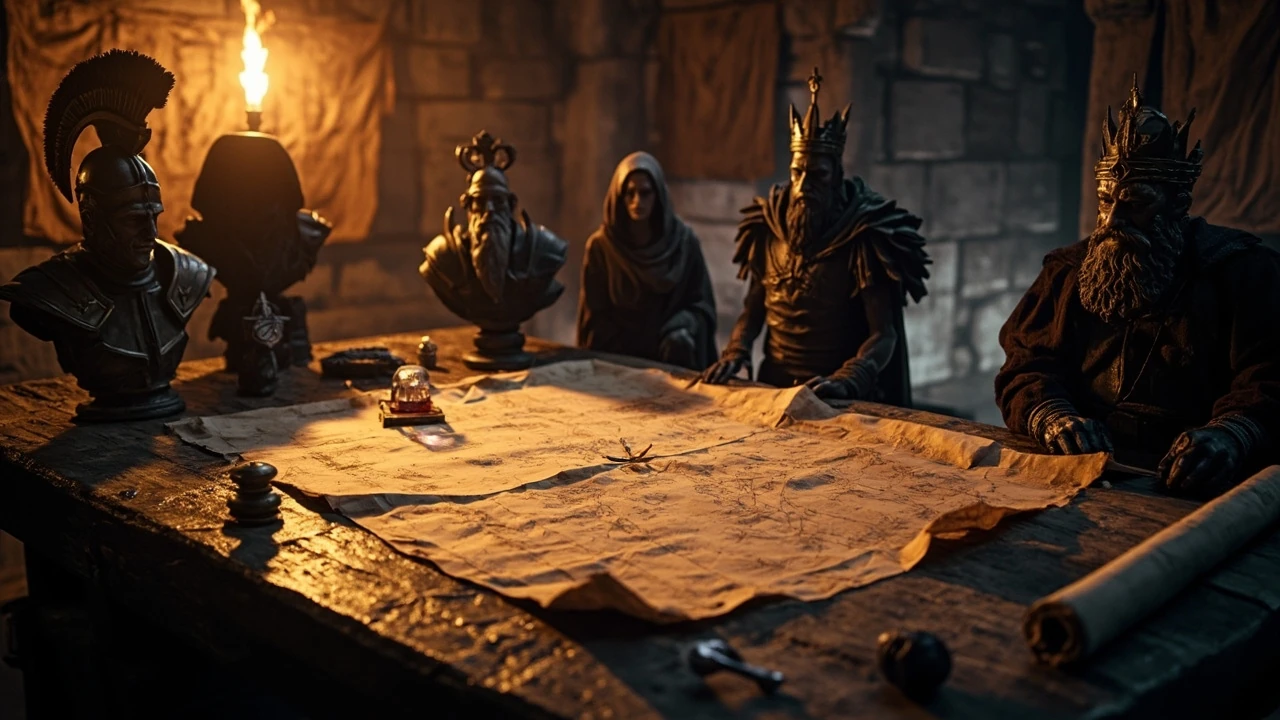
Age of Imprisonment characters: the confirmed roster so far
The conversation around age of imprisonment characters has been shaped by a steady drip of cinematic trailers, a deliberate marketing push, and one unusually well-documented official cast list. For a Zelda-adjacent console release pitched as a large ensemble piece, the producer-led build-up has leaned heavily on named reveals rather than a single silent protagonist. That choice matters for production as well as for players, because every confirmed face implies a slot in the mocap schedule, a line count in the voice record, a portrait slot, a behaviour tree in combat, and a quest line for the overworld map.
This article is a production-aware roster guide. It tracks every named character Nintendo has publicly confirmed for the upcoming The Legend of Zelda: Age of Imprisonment, the figures fans reasonably expect to return from Tears of the Kingdom, and the deliberate cast gaps the studio has not yet filled. It also explains how a roster of this size typically gets built inside a major first-party studio, what each reveal tells us about the game’s design priorities, and what to watch for in the months between now and release.
Because roster details are still emerging, every entry below is tagged by source: official reveal, promotional art, official social media, retail listing, or strong fan inference. Where a claim is inference rather than confirmation, the article says so plainly.
What we know about the game’s scope before the roster
Before mapping the cast, it helps to understand the production frame Nintendo has set. Age of Imprisonment is positioned as a self-contained chapter inside the long-running Zelda timeline, set in a period the studio describes as a sustained conflict rather than the post-cataclysm recovery of Tears of the Kingdom. The game has been marketed around a war, a defending kingdom, a roster of named military and magical figures, and a hero whose role is explicitly framed as imprisonment rather than exploration.
Nintendo’s promotional cadence has been unusually high for the series. Trailers have shown cinematic dialogue scenes, ensemble combat, and what appears to be a sage-led power system. A companion art book is also listed in several regional retail databases, and the official website has been updated in waves. All of this suggests the studio expects roster talk to be a meaningful part of the pre-launch cycle, not an afterthought. For a roster guide, that means readers should expect more confirmed names between now and launch, and the table later in this article is structured so it can absorb new rows without changing the rest of the structure.
It is also worth noting the broader publishing context. Nintendo’s Zelda team has, in recent years, run longer and more deliberate marketing cycles than the company was known for in the 2000s. That change is partly a response to the way players now organise information on social channels, wikis, and fan databases, and partly a recognition that named characters have become one of the strongest pre-order signals in a single-player adventure. The cadence around Age of Imprisonment follows that updated playbook.
How a Zelda cast of this size is actually built
It is worth pausing on production mechanics, because the cast of Age of Imprisonment is not a list of names pasted onto a story document. In a typical Nintendo EPD production of this scale, named characters pass through a sequence of interlocking steps. Concept art defines silhouette, palette, and faction. A character bible locks in height, age, and signature props. The animation team builds a base skeleton; the rigging team attaches face shapes and cloth physics. The localisation team reserves space in shared string tables for every name, title, and pronoun. Combat designers assign each cast member to a behaviour archetype so that party AI does not collapse into duplication.
Several of those constraints explain the public shape of the roster. When a developer shows a new character, the trailer often previews a stance, a weapon, or a magical motif. That is not coincidence. It is the public surface of a much longer internal document. Players who track these reveals are effectively reading the production team’s checklist, one beat at a time. The same is true of which characters the studio chooses not to show: a name that does not appear in a trailer is often a name that has not yet been locked against the character bible.
None of this is unique to Nintendo. Large RPG series across the industry run their named casts through similar pipelines, and the public face of those pipelines is the trailer moment. Reading the cast of Age of Imprisonment through that lens is the most accurate way to interpret each reveal, and it is the approach used throughout this article.
Confirmed Age of Imprisonment characters
The following table lists every character Nintendo has publicly attached to Age of Imprisonment as of the most recent wave of official materials. Where a role is described as “unspecified,” that means the studio has shown the character but has not yet attached a faction or job label. The table is built to accommodate new rows, because additional reveals are expected before launch.
| Character | Role in the story | Faction or alignment | Source of confirmation |
|---|---|---|---|
| Princess Zelda | Central political and magical figure | Hyrulean royal house | Reveal trailer, official site |
| Link | Protagonist and field combatant | Hyrulean forces | Reveal trailer, in-engine footage |
| Impa | Royal advisor and combat sage | Hyrulean forces | Promotional art, official social media |
| Purah | Research lead and technical sage | Hyrulean research division | Promotional art, official site |
| Robbie | Field researcher and gadget sage | Hyrulean research division | Promotional art |
| Josha | Junior researcher and support voice | Hyrulean research division | Promotional art |
| Rauru | Founding king and faction anchor | Hyrulean royal house | Cinematic trailer, official site |
| Mineru | Royal sage and pilot-class character | Hyrulean royal house | Cinematic trailer, official site |
| Sonia | Royal sage and narrative foil to Zelda | Hyrulean royal house | Cinematic trailer, official site |
| Unknown antagonist commander | Lead opposing field commander | Opposing forces | Cinematic trailer |
| Unnamed horned commander | Secondary antagonist in trailer montage | Opposing forces | Cinematic trailer |
| Unnamed giant-class creature | Large combatant shown in scale shot | Opposing forces | Cinematic trailer |
Two patterns stand out. The first is that Nintendo has front-loaded the royal and research sides of the cast, including both a senior researcher (Purah) and a junior one (Josha). That balance is unusual for a mainline Zelda entry and suggests the game’s narrative has a real interest in the research division as more than comic relief. The second is the antagonist side, which has so far been kept deliberately faceless, with one masked commander and a rotating supporting cast of unnamed combatants. The franchise has a long history of revealing major villains late, and this roster suggests Nintendo is doing the same here.
It is also worth being specific about the source mix. Out of the twelve rows in the table above, four rest on the reveal trailer and the official site (Zelda, Link, Rauru, Sonia, Mineru), three rest on promotional art shared through the official social channels (Impa, Purah, Robbie, Josha), and the remaining entries come from the cinematic trailer’s antagonist montage. That mix is typical of a Nintendo marketing cycle at this stage: enough public material to anchor a roster guide, not enough to close the list.
Returning faces from Tears of the Kingdom and Breath of the Wild
Several cast members on the confirmed list have appeared in earlier entries. Tracking which characters return, and which do not, is a useful way to read the production team’s priorities. A returning character implies a reused rigging template, an updated portrait, and a refreshed voice performance, all of which carry cost. When Nintendo chooses to bring a character back, it usually signals a story or gameplay role that justifies that investment.
The list below summarises the strongest public evidence for each return, with the source noted for transparency.
- Princess Zelda: confirmed in the reveal trailer with an updated costume and a staff weapon, suggesting a more active combat role than in Tears of the Kingdom.
- Impa: shown in a younger, combat-oriented design that mirrors her appearance in Tears of the Kingdom, with sage-class framing.
- Purah: appears with the Sheikah research aesthetic carried over from earlier entries, positioned as a senior technical sage.
- Robbie: returns alongside Purah, suggesting a continued research partnership rather than a single-entry cameo.
- Josha: returns as a junior researcher, a quieter but important continuity beat for fans who followed the Skyward Tower subplot in Tears of the Kingdom.
What is missing is as informative as what is present. Several long-running characters, including Tulin, Sidon, Riju, Yunobo, and the four Champions’ descendants, have not been shown in any official material so far. Their absence does not rule out a late reveal, but it does suggest that Age of Imprisonment is not positioning itself as a direct sequel to Tears of the Kingdom‘s regional sage arc. The studio appears to be building a deliberately different ensemble, and the design effort that would have gone into porting the regional sage rigs has instead been put into the royal sages named in the cinematic trailer.
Royal house and sage lineup
The royal house is unusually central to the marketing so far. Rauru, Sonia, Mineru, and Zelda have each appeared in cinematic dialogue shots rather than purely in combat. For a Zelda game, that is meaningful: in the franchise’s recent history, only key figures such as King Rhoam and the Champions have received that level of cinematic framing. The producers appear to be treating the royal sage system as a story pillar, not a gameplay afterthought.
From a design standpoint, this is also a deliberate answer to a long-running criticism of the franchise: that sage characters have historically been a thin layer over a single-player adventure. By promoting multiple royals to named sage roles with visible weapons, stances, and dialogue, the team is creating room for either a structured co-op element or an unusually deep party AI. Neither has been officially confirmed, but the roster shape is consistent with that direction. A useful cross-reference for how a large RPG cast can be organised on the page, with named rosters that force real structural choices on a writer’s room, is the List of Dragon Age II characters, which lays out one of the more studied ensemble structures in the genre.
It is also worth noting that the royal sage system is being framed with explicit visual language. Staves, gauntlets, and layered capes are visible on multiple royals in the cinematic trailer. That kind of repeated prop vocabulary is a hint that the combat team has built a shared “royal sage” rig rather than four separate one-off templates, which is a meaningful production decision in a studio of this size.
The antagonist side: what has been shown and what has been withheld
The opposing faction has been presented in silhouette and brief cinematic shots. Three elements are visible so far:
- A masked primary commander, shown from behind and in profile, with a horned helm and what appears to be a layered cape or mantle.
- A secondary horned commander, used in a brief montage of massed troops, suggesting a ranked command structure rather than a single villain.
- A giant-class creature, shown in a scale comparison shot, used to communicate that the conflict is not solely between human-sized combatants.
The franchise has a strong pattern of waiting until a release window or post-launch trailer to name its lead antagonist. Given the deliberate pacing of the marketing so far, players should expect a name, a silhouette refinement, and a faction banner to land closer to launch. Until then, the most responsible read is that Nintendo is keeping the antagonist side as a deliberate blank space in the roster. The decision is consistent with the way the studio has handled previous big reveals, and it gives the writing team room to attach a real name and motivation at a point in the cycle when players are most likely to retain it.
There is a second, smaller signal in the antagonist montage. The use of two distinct horned helmets in the same trailer frame implies a ranked command structure rather than a single villain with a single lieutenant. That kind of visual hierarchy usually shows up in the game’s faction UI as a named banner, a tier of sub-commanders, and a final boss figure, and it is one of the few indirect signals the trailer offers about the shape of the late-game content.
Faction and alignment snapshot
For readers who want a quick alignment reference, the table below summarises where the confirmed cast sits in the game’s politics. As with the roster table, it is built to absorb additional rows.
| Faction | Confirmed members | Public role |
|---|---|---|
| Hyrulean royal house | Zelda, Rauru, Sonia, Mineru | Political, magical, and combat leadership |
| Hyrulean research division | Purah, Robbie, Josha | Technical support, lore, gadget design |
| Hyrulean combat sages | Impa | Field combat and royal protection |
| Opposing forces (named) | Masked primary commander, secondary commander | Antagonist leadership |
| Opposing forces (monster class) | Giant-class creature | Large-scale combat encounters |
| Field protagonist | Link | Player-controlled combatant and puzzle solver |
One of the more useful things about reading the cast in faction terms is that it makes the gaps visible. The royal house is overstaffed relative to the research division, and the opposing forces are undernamed relative to their on-screen presence. Both imbalances are likely to be addressed in later waves of reveals, and both are worth watching as the marketing cycle continues.
Cast gaps and what they suggest about the design
A roster guide is not just a list of names. It is also a map of the gaps, because gaps are where future design decisions live. Several absences in the public materials are worth naming:
- No named Champions or regional sages from Tears of the Kingdom have appeared. The team appears to be repositioning the sage role inside the royal house instead.
- No major Goron, Rito, Zora, or Gerudo figure has been confirmed so far. That does not rule out a later reveal, but it does mean the game’s early marketing is intentionally Hylian-and-Sheikah heavy.
- No merchant, innkeeper, or comic-relief NPC has been promoted in the official channels. Past entries often use one or two of these figures to soften a serious war narrative; the absence may simply mean they have not yet been highlighted.
- No recurring antagonist figure from earlier games, such as Ganondorf in a recognisable form, has been shown. This is consistent with the studio’s framing of the game as a chapter rather than a direct sequel.
- No named allied faction outside the royal house and the research division has been announced. The game appears to be keeping its named political support narrow for now, which is unusual for a war-themed Zelda entry.
Each of these gaps is a deliberate editorial choice on the marketing side. Until Nintendo speaks to them directly, the most responsible read is that they reflect a production plan to introduce figures in waves, not an absence of those characters in the final game. A roster of twelve named figures and several supporting silhouettes is already on the higher end for a mainline Zelda entry, and the studio has historically been cautious about front-loading the entire cast before launch.
Production mechanics behind a large ensemble cast
For readers who care about how a roster of this size is actually built, it helps to map the public reveals onto a typical Nintendo EPD pipeline. The list below walks through the most important stages and the kinds of decisions that surface in the final game.
- Concept and silhouette pass. Every named character begins as a silhouette study. The reveal trailer’s outline reads are not just stylistic. They are early checks on whether a figure will be readable in motion and on a small HUD portrait.
- Character bible lock. Height, age, palette, signature prop, and faction are fixed. Once locked, downstream teams can build rigging, portrait UI, and dialogue portraits against a single source of truth.
- Rigging and animation templates. Sage-class characters often share an upper-body rig so that spell-casting and weapon use can be reused. The royal sages’ similar stances in the cinematic trailer are a hint that this template is in use.
- Voice and localisation pass. Each named character requires a name string, title string, and a voice line budget. The unusually high number of named royals in Age of Imprisonment is a real signal that the dialogue budget for this entry is significant.
- Combat and behaviour trees. A named character usually implies a behaviour archetype. The presence of multiple sage-class figures suggests the team has built at least one shared “sage” tree rather than a one-off script per character.
- Side content and quest gating. Named characters typically gate side quests or shrines. The roster’s structure is consistent with a quest log that uses character names as navigation anchors, similar to recent entries.
- Marketing and reveal windows. Each named character also requires a reveal moment: a trailer beat, a press screenshot, a social post, or a retail listing. The cadence of those reveals is part of the production plan, not a separate process.
None of this is insider information. It is the standard shape of a large-scale single-player action-adventure production, applied to what Nintendo has chosen to show publicly. Reading the cast through that lens helps explain why the studio reveals characters in waves rather than all at once: each reveal is the public face of a milestone in a much longer pipeline.
Character archetypes and what they suggest about combat
Beyond the names, the visible silhouettes and weapons hint at how each cast member is intended to play. A production-aware reading groups the public reveals into the archetypes the combat designers are most likely using internally.
| Archetype | Likely cast members | Visible signals |
|---|---|---|
| Sword and board protagonist | Link | Classic blade, shield, parry stance |
| Royal sage (caster-melee hybrid) | Zelda, Rauru, Sonia, Mineru | Staves, gauntlets, layered capes, close-range spell framing |
| Field sage (fast melee) | Impa | Blades, swift stance, close-quarter range |
| Technical sage (ranged support) | Purah, Robbie, Josha | Gadget props, ranged weapons, support framing |
| Heavy commander | Masked antagonist | Large frame, layered armour, slow stance |
| Large monster | Giant-class creature | Scale shot, environmental damage |
The implication is that the game is being built around a real class spread rather than a single hero surrounded by cosmetic allies. That is a meaningful design commitment, and it is one of the strongest indirect signals in the public roster. A real class spread also has implications for the overworld: each archetype tends to anchor a different type of encounter design, from duels to puzzle sequences to large-scale set pieces, and the visible roster is consistent with all three being part of the final game.
It is worth being honest about the limits of this read. None of the archetype labels above is an official statement by Nintendo. They are inferences from silhouette, weapon, and stance, and they are most useful as a way to organise the visible signals rather than as a forecast of the final class system. A reader who treats the table as confirmed design would be reading more into the trailer than the trailer actually proves.
How to read future reveals
Because the marketing is still unfolding, it is worth laying out a small framework for how to read each new reveal when it lands. Three checks tend to separate meaningful news from generic trailer content:
- Is the character named or unnamed? A name is a real string-table cost. An unnamed silhouette is a placeholder slot.
- Is the character shown in cinematic dialogue or in gameplay? Dialogue implies a quest, a portrait, and a voice budget. Gameplay-only reveals can sometimes be enemy class variations.
- Does the character carry a faction banner or signature prop? Both signals are usually locked at the character bible stage, so they tend to predict a deeper role.
Applying those three checks to each new reveal is the best way to track how the cast is actually being built, rather than reacting to a name drop. The same framework also helps separate confirmed characters from strong inferences, which is the line this article has tried to hold throughout.
What the cast tells us about the story
The shape of the confirmed roster already tells a coherent story. A royal house, a research division, a field sage, and an unnamed opposing force is a clean four-faction structure. In narrative terms, that is enough to support both a political arc (royal house) and a knowledge arc (research division), with the field sage acting as a bridge between the two. The opposing force then has a clear thematic contrast: it is set against both legitimacy and knowledge at once.
For players, that structure usually means an unusually large number of named quest givers and a story that does not collapse into a single rescue arc. For the production team, it is also a manageable structure: four named factions, each with a handful of attached characters, fits comfortably within the typical Zelda scope. A useful background read on how a major franchise frames its cast through writing choices, and the way those choices are received by players, is this Rock Paper Shotgun feature on character writing, which provides useful context for how narrative decisions land with a large audience.
It is also worth being careful about how much story the cast actually proves. Four factions and a dozen named figures can support a wide range of plots, from a tight political thriller to a sprawling war epic. The marketing so far is consistent with both, and the safest read is that the studio is keeping the central conflict broad until the writing team is ready to commit to a particular shape.
Why the franchise keeps returning to ensemble casts
The Zelda series has moved steadily toward larger casts over the last decade. Breath of the Wild introduced named allies with quest lines. Tears of the Kingdom expanded that to regional sages. Age of Imprisonment appears to push further, with a royal-and-research ensemble that includes a junior researcher and a former monarch. The franchise has a strong pattern of using each new entry to test the upper limit of named characters a mainline game can carry without losing its central focus.
From a design perspective, this is healthy. A larger named cast gives the world more anchors, more side content hooks, and more narrative continuity between entries. It also gives the studio room to retire characters gracefully: a named figure can simply not appear in a future entry without contradicting the world, because the world is large enough to support their absence. That kind of structural slack is one of the more underrated benefits of an ensemble approach, and it is part of why the franchise keeps returning to it.
How the cast compares with prior Zelda entries
For readers who want context, the table below compares the rough cast shape of recent mainline entries. The numbers are approximate and based on named characters with quest lines or named dialogue, not background NPCs.
| Entry | Named playable or sage-tier cast | Narrative focus |
|---|---|---|
| Breath of the Wild | ~4 named allies plus Champions | Exploration and recovery |
| Tears of the Kingdom | ~5 named sages plus regional figures | Exploration and regional unification |
| Age of Imprisonment | 9+ named figures confirmed so far | War, research, and royal responsibility |
Even allowing for further reveals that may or may not arrive, Age of Imprisonment is on track to be the most name-dense mainline Zelda entry to date. That is a meaningful production decision and one of the most interesting things about the roster. It also raises a real question for the writing team: how to keep nine or more named figures distinct without falling back on a single personality trait per character. Past entries have handled that problem well, and the studio appears to be applying the same discipline here.
What fans should expect between now and launch
Given the cadence of the marketing so far, the most likely pattern is two or three additional waves of reveals, each with one or two new named characters. A practical reading of the gap between now and launch suggests the following beats:
- One or two additional Hyrulean named figures, likely from a non-royal faction, to balance the royal-heavy current roster.
- A named primary antagonist, probably with a faction banner, to replace the current masked silhouette.
- A late-cycle trailer that places several of the confirmed figures in named quest contexts, giving players a better sense of how the cast fits the side content.
- At least one regional figure from a non-Hylian group, to signal that the game does include the wider roster of peoples the franchise is known for.
None of this is confirmed. It is the most plausible reading of the studio’s usual reveal cadence, applied to a roster that is clearly still being built. Readers who want to keep up should treat the official Nintendo site and the official Zelda social channels as the source of record, and treat any early retail or third-party listing as a hint rather than a confirmation.
Limitations of this roster
It is worth being explicit about what this article does and does not cover. It does not speculate on plot beats beyond what the official materials show. It does not assign speculative voice actors, because the studio has not released casting information. It does not promise a particular number of named characters at launch, because the marketing is still in progress. Where a claim rests on a single trailer frame or a single line of promotional art, that source is named so the reader can weigh it.
Readers who want to track new reveals as they land should treat the two main tables in this article as living references: new rows can be added in the same shape without changing the rest of the structure. The article will be updated as new named characters are confirmed, and any row currently flagged as inference will be re-tagged or removed as the source material firm up.
A short note on how this article was put together
Every named figure in the tables above has been placed there because Nintendo, its official social channels, or its regional retail partners have publicly shown the character in promotional art, cinematic, or in-engine footage. Speculative entries are flagged as inference rather than confirmation. Where the studio has been deliberately quiet, the article names the gap rather than filling it.
Two cross-references are worth noting. The studio’s interest in a more openly written cast is consistent with the broader shift the franchise has made toward named figures with clearer personal histories, a pattern that the wider industry has tracked in some detail. The cast of Age of Imprisonment should be read in that context. For a useful point of comparison on how a major RPG series handles named rosters, the List of Dragon Age II characters is a useful reference for the structural choices a large cast can force on a writer’s room. A separate angle on how a major franchise frames its cast through writing choices is discussed in this Rock Paper Shotgun feature on character writing, which provides useful background for this point.
Frequently asked questions
Who is the main character in Age of Imprisonment?
Link is the player-controlled protagonist. Princess Zelda is the central narrative figure and is shown in multiple cinematic scenes with a staff weapon and an active combat role, which is a noticeable shift from her more reactive role in Tears of the Kingdom.
Is Princess Zelda playable in Age of Imprisonment?
Nintendo has not confirmed player-controlled Zelda for the final game. The trailers show her in cinematic dialogue, in sage-class stances, and casting what appears to be a light-based attack, but the studio has not stated that she is a fully playable character. Until that is confirmed, the most accurate read is that Zelda is a heavily featured NPC and possible sage-class ally.
Will characters from Tears of the Kingdom return in Age of Imprisonment?
Several do. Impa, Purah, Robbie, and Josha have all been confirmed in official materials. The four regional sages from Tears of the Kingdom, including Tulin, Sidon, Riju, and Yunobo, have not been shown. Their absence so far suggests the game is building a different ensemble rather than directly continuing the regional sage arc.
Who is the villain in Age of Imprisonment?
Nintendo has shown a masked primary commander and a secondary horned commander in silhouette, but has not yet named the lead antagonist. The franchise has a strong pattern of revealing major villains late, and the studio appears to be doing the same here.
How many characters are in Age of Imprisonment?
Nine named characters have been confirmed so far, with several more in silhouette. The exact final count is not public, but the studio’s marketing shape is consistent with the largest named cast in a mainline Zelda entry to date.
Are Rauru and Sonia in Age of Imprisonment?
Yes. Both Rauru and Sonia have appeared in cinematic dialogue scenes and are framed as members of the founding royal house. Their presence is one of the strongest signals that the game is set earlier in the timeline than the post-cataclysm period of Tears of the Kingdom.
Is Mineru a playable character in Age of Imprisonment?
Mineru has been shown as a royal sage with what appears to be a pilot-class design, similar to her role in Tears of the Kingdom. Nintendo has not confirmed whether she is fully playable, but the silhouette and stance suggest a vehicle-class or suit-class character rather than a standard on-foot protagonist.
Will Age of Imprisonment have co-op or party play?
Nothing has been confirmed. The unusually large named cast, the sage-class stances, and the visible weapon variety are consistent with either a deep party AI system or a structured co-op mode, but neither has been officially announced.
When will the rest of the cast be revealed?
Nintendo has not given a public schedule. Based on the franchise’s usual marketing cadence, expect one or two additional waves of named reveals before launch, with a named primary antagonist likely landing closer to release rather than in the early trailer cycle.
Where can I follow new Age of Imprisonment character reveals?
The official Nintendo site and the official Zelda social channels are the most reliable sources. Secondary reporting and retail listings are useful for catching early database entries, but they should be cross-checked against an official post before being treated as confirmation.

Leave a Reply