
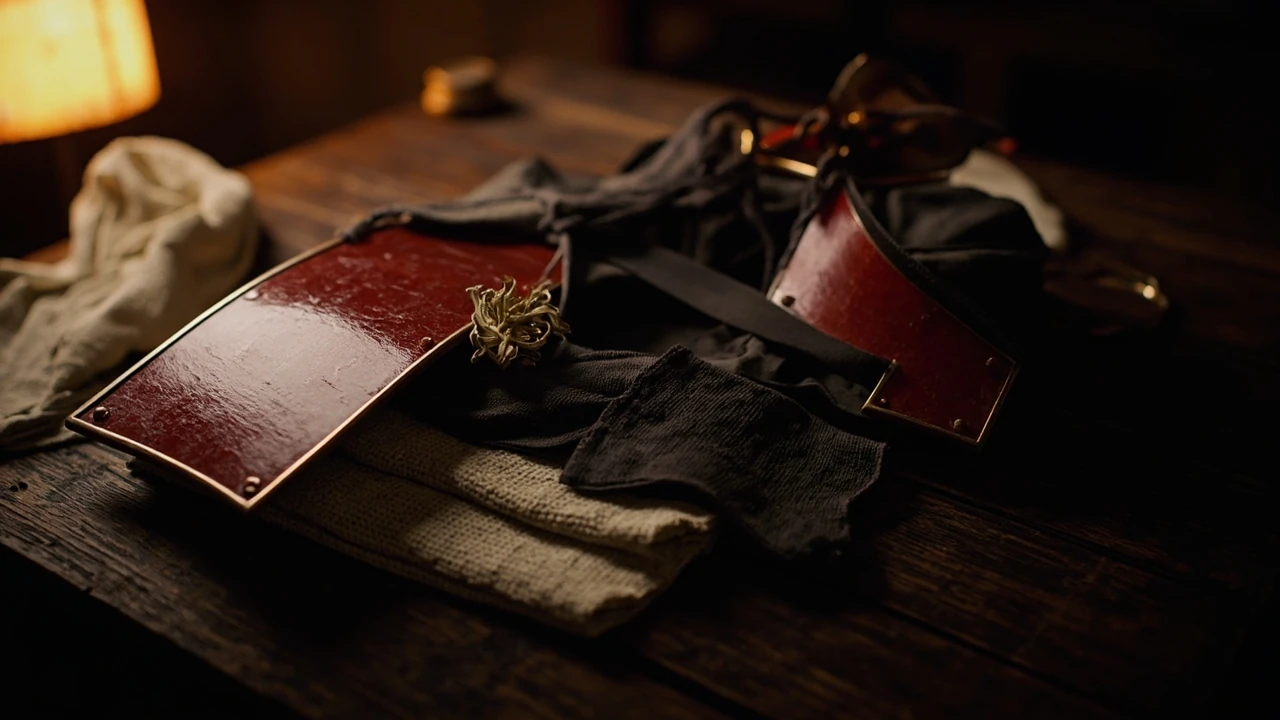
Spider lily armor in Ghost of Yotei and why players plan around it
The spider lily armor in Ghost of Yotei sits at the end of a named Myth quest, which makes it one of the few sets in the game that arrives as a payoff for narrative progress rather than exploration. The armor comes from a single named boss, is collected on the way out of that boss arena, and then becomes a permanent option at the armor workbench. Because the set leans on Stagger and the combat system’s window of vulnerability, it is the kind of piece that players either commit to for a run or skip while building around other perks.
This page treats the set from the angle a returning player and a build-focused player actually need. The goal is to walk through the unlock path, the perks as the game presents them, the upgrade track at the armorer, and the kinds of builds that benefit from those perks. The article also covers how the set fits next to other Ghost of Yotei armor choices, the practical limits of a Stagger-focused playstyle, and the decisions worth making before you slot the spider lily armor into a loadout.
A short note on scope: the spider lily armor is a single in-game set with a single acquisition path. The article does not speculate on hidden versions, alternate dyes, or unannounced upgrades. Where the verified game guide is the only solid source for a detail, the article points to that guide rather than guessing. The IGN page for the set is the single verified source for unlock steps and perk wording used here.
How to obtain the spider lily armor
The spider lily armor is the reward for completing the Myth quest named “The Spider Lily General.” The quest is started at a single map marker, the Mysterious Gate, located in the southeastern part of the Tokachi Range, south of Shizunai Woods and east of Yamane Bluffs. Players who arrive at the gate start the chain that culminates in a named boss fight; the armor drops in the same arena and has to be picked up on the way out of the encounter.
Three points are worth being explicit about, because the wording in third-party wikis sometimes blurs them:
- The unlock is a quest reward, not a chest spawn. If the player defeats the boss and walks past the pickup, the set is not lost, but it does require re-entering the area rather than re-rolling a random drop.
- The pickup happens on the way out of the boss arena. Players who rush the cutscene and sprint for the exit marker can miss the item prompt on the ground.
- The set is a fixed reward for the quest completion. It is not gated by luck, drop tables, or pre-order bonuses.
For a build planner, the practical consequence is that the spider lily armor is a story progression item. It sits on the timeline in the same neighborhood as the other Myth quest rewards in the Tokachi Range. Players who plan a Stagger build from the start of the region can expect to slot it in roughly when they finish the chain at the Mysterious Gate, then take it to the armorer for upgrade work.
What the perks actually do
The spider lily armor in Ghost of Yotei ships with three perks, which the game describes as leaning into a particular playstyle rather than a stat profile. The set is presented as Stagger-focused, with the latter perk being aimed at fights against large groups. The in-game description positions the armor as the equipment of a general lost to grief, with a bloodthirsty intent that pushes enemies down into vulnerable states rather than burning them down through raw damage.
Read against the broader combat loop, the perks do three things:
- They push enemies into the Stagger state more often, which is the moment in Ghost of Yotei’s combat where an enemy is locked out of attacking for a short window.
- They extend the value of the Stagger window, so a single staggered enemy is a more reliable source of free damage and repositioning than it would be in a generic set.
- They give the player more control in group fights, where one staggered enemy is the difference between a clean parry rotation and a surrounded animation cancel.
That last point is where the armor earns its reputation. Against a single duelist, the marginal value of an extra Stagger is small. Against a packed encounter, where the player has to choose which enemy to ignore, the Stagger effect turns a threat into a brief prop, which is when the set pulls ahead of more defensive or more damage-focused options. Players who like to clear an encounter by sequencing enemies in a specific order are the ones who get the most out of the spider lily armor.
Stagger as a system, and why the perks matter
Stagger in Ghost of Yotei is a short, recoverable status that interrupts an enemy’s attack string. While an enemy is staggered, the player can land a heavy hit, a stance break, or reposition without trading damage. The state lasts long enough to matter and is short enough that the player has to plan around it. The base game already exposes Stagger through parry timing, perfect dodges, and certain weapon combos; armor perks decide how often and how cleanly those openings arrive.
A Stagger-focused set has to do more than raise the chance of triggering the state. It has to convert a trigger into a meaningful follow-up, because a stagger that lands in a bad position wastes the window. The spider lily armor is built around that conversion: it treats Stagger as a tactical resource, not a vanity number, and gives the player the breathing room to chain staggers into a single encounter plan. The trade-off is that the set does not push damage, posture, or ranged pressure, so the player carries the burden of finishing the fight while everything is still in the right order.
Two consequences follow for a build plan. First, the spider lily armor pairs best with weapons and charms that already create stagger pressure, so the set multiplies the value of a strong parry timing rather than replacing it. Second, the set loses some of its value in fights where enemies have low stagger resistance or cannot be staggered by the moves the player uses most often, because the perk conversion depends on actually entering the state.
Build styles that fit the spider lily armor
The build styles that benefit from the spider lily armor are the ones that already treat combat as a sequencing problem. The set rewards players who plan which enemy to hit first and which enemy to delay. The most common playstyle that fits is the parry-and-punish loop: a timed parry triggers stagger, the perk extends the window, and the player lands the punish that would otherwise be too risky. A second fit is the wide-swing stagger chain, where the player uses a slower weapon to hit multiple enemies and lean on the perk to keep the group locked down while they work through it.
The build styles that fit the set less well are pure damage glass cannons, where the player tries to kill enemies before stagger windows matter, and stealth bows, where the player avoids combat entirely. Those are valid styles, but they do not need a Stagger perk conversion, and the set’s other perks are not strong enough to compensate for the loss of the stagger conversion.
For players who do not have a strong combat style yet, the spider lily armor is a reasonable mid-game anchor: the perks force a sequencing habit, and the sequencing habit generalizes to other sets once the player has access to them. Players who already have a sequencing habit will find that the armor improves the parts of the game they were already good at, which is the cleanest signal that a set is worth committing to.
Upgrading the set at Ginji the Armorer
After the spider lily armor is collected, it becomes an upgrade track at Ginji the Armorer. Upgrades push the perk values along the same curve used by the rest of the armor in Ghost of Yotei, so the set is not a sidegrade that gets left behind. The upgrade resource is shared across the armor bench, which means that choosing the spider lily armor as the priority target is a real opportunity cost against other perks the player might want.
Three practical rules apply:
- Upgrade to the next tier before committing to the set for a region. The set’s perks are noticeable at higher tiers and middling at the base tier, and the difference is enough to change the verdict on whether the armor is worth running.
- Hold the highest upgrade tier for the encounters that actually need it. A Stagger build is most valuable in large group fights and named boss duels, so the tier that matters most is the one that applies during those fights.
- Treat the set as a slot, not a personality. If a different armor piece later covers a weakness in a Stagger rotation, the spider lily armor can return to the bench without losing anything permanent.
The armorer also lets the player preview the perks before committing resources, which is worth doing once the set is collected. Players who plan around the spider lily armor often find that the perk description reads better than the perk feels, and a short preview run is a cheap way to avoid spending upgrade resources on a playstyle that does not fit.
How the set compares to other Ghost of Yotei armor
Ghost of Yotei presents armor as a set of three perks rather than a single stat, so comparing the spider lily armor to other sets is a question of perk identity rather than raw numbers. The table below is a build-planning view, not a power ranking. Power rankings tend to oversell whichever set a player happens to like; what matters here is which perk identity each set emphasizes and which kind of player benefits.
| Armor identity | Primary perk lean | Combat feel | Best fit for |
|---|---|---|---|
| Spider lily armor | Stagger | Sequencing, group control, punish windows | Players who plan enemy order in group fights |
| Archery-leaning sets | Ranged pressure | Distance, line-of-sight, drawn-shot timing | Players who like to open fights from range |
| Parry-leaning sets | Defensive timing | Clean parry, follow-up counter, low health safety | Players who build around perfect-timed parries |
| Exploration-leaning sets | Traversal and discovery | Less combat value, more open-world movement | Players who spend more time moving than fighting |
The spider lily armor sits between the parry-leaning and the wide-swing stagger chain. It is not the strongest pure parry set, and it is not the strongest pure damage set; it is the set that rewards a player who already does both at a competent level and wants to convert the gap between the two into a more reliable stagger plan. A player who does not have that baseline will see the set as average. A player who does have it will see the set as one of the more comfortable Myth quest rewards in the region.
When to slot the spider lily armor into a run
The timing of the spider lily armor in a run is set by the quest chain at the Mysterious Gate in Tokachi Range, which is roughly the mid-point of the regional story arc. Players who arrive at the gate before clearing the regional main story content will have a slightly under-leveled set, because the upgrade resources at the armorer scale with progress, but the perks will be active. Players who arrive after clearing the regional content will have access to the higher upgrade tiers and can push the set to its real ceiling.
Two timing choices are worth weighing before slotting it in:
- If the player plans to clear Tokachi Range as a Stagger-focused run, the set should be slotted as soon as it is collected and upgraded to the first tier, then held in the loadout while the rest of the region is cleared. The set’s main value in the late game comes from group fights, and most of those are inside the regional story arc.
- If the player plans to use a different set for the regional arc, the spider lily armor can sit in storage until the next region. The Myth quest does not lock the player into a particular style, and the set does not lose value by being held.
One practical check before committing is whether the player is about to leave Tokachi Range for a region that de-emphasizes group fights. If the next region is mostly duels, a Stagger set is still useful but less differentiated, and a more damage- or parry-focused set can be a better slot. The spider lily armor’s strongest case is in the same region where it is unlocked.
Limitations and edge cases
The spider lily armor has a clear identity, and the limitations follow from that identity. The set is not the strongest choice for fights that resist Stagger, which include a small number of named encounters where the Stagger window is shorter or where the boss transitions out of stagger quickly. The set is also not a great fit for players who prefer to spend the post-stagger window repositioning rather than attacking, because the perk conversion rewards the attacking choice and is wasted on a pure reposition.
Other edge cases worth keeping in mind:
- Fights where enemies can be killed in a single punish cycle are not where the set shines. A Stagger conversion only matters if the player plans to fight the enemy more than once.
- Fights where the player has to interrupt a specific enemy attack are not where the set shines either, because stagger conversion targets the enemy’s state, not the player’s animation.
- Boss fights with phase transitions reduce the value of any set that converts one type of window, and the spider lily armor is no exception. The set still works, but the perk ceiling is lower than in a long group fight.
None of these limits are dealbreakers. They are the same limits that any Stagger-focused set would have, and the spider lily armor is well-tuned for the cases it is meant for. Players who hit one of these limits in a specific fight should swap to a more general set for that fight, then return to the spider lily armor for the rest of the run.
Charm and weapon pairing notes
Ghost of Yotei lets players pair armor perks with charms and weapons, and the spider lily armor benefits most from a charm that converts a Stagger window into something the player already wants. A charm that adds damage during a Stagger fits the set’s core loop. A charm that reduces incoming damage during a Stagger fits the set’s secondary loop of sequencing the fight. A charm that converts the Stagger window into stamina or posture recovery is a weaker fit, because the set is built to attack in that window rather than to recover from it.
Weapons matter less than charms, but they still set the floor. A slower, stagger-prone weapon multiplies the set’s value, because each hit is more likely to trigger the state the set converts. A faster, low-stagger weapon pulls in the opposite direction, because the player lands more hits without entering the state the set cares about. The spider lily armor is not strict about which weapon it is paired with, but the set is more comfortable with one style than the other.
For players who do not yet have a preferred weapon, a sensible default is the slowest weapon the player is comfortable with. The slower swing is a better anchor for a Stagger build, and the spider lily armor gives the player the time to learn the swing without losing encounters in the meantime.
Troubleshooting the unlock path
The Myth quest at the Mysterious Gate is short, but the unlock has a few common friction points worth being explicit about. None of these are bugs; they are the kinds of issues that show up when a player is reading a guide and skips a step.
- The Mysterious Gate marker only appears after the regional story has progressed far enough to reveal it. Players who arrive at the rough area before the marker is revealed can walk past the gate without seeing the quest prompt.
- The boss arena has a single exit. Players who use a fast-travel option out of the arena can leave the armor pickup behind, and the set has to be re-acquired by re-entering the area on foot.
- The armor is a quest reward, so the pickup prompt can look like a generic item. The armor prompt is the only set-tier item in the arena, which is what makes it identifiable without reading the on-screen label.
If the quest is not visible at the gate, the fix is to push the regional main story forward by one or two beats and return. The gate is a fixed map marker, so it will not move; the player just has to meet the progress gate. If the pickup is missed, the fix is to walk back into the boss arena and look for the item prompt near the exit path. Neither of these is a known bug, and both are covered in the official set guide at IGN’s Spider Lily Armor page, which provides useful background for this point.
Production context: how a Myth quest set like this one is built
The spider lily armor is a good case study in how a single set in a regional arc is structured. From a production standpoint, the set is a small, self-contained package: a quest chain, a boss, a reward, three perks, and an upgrade track. Each part is owned by a different discipline. The quest chain is a level design and narrative artifact, the boss is a combat design and animation package, the perks are a gameplay systems deliverable, and the upgrade track is shared armor bench content. The set is shipped when all four parts land together.
For a studio, the interesting question is what makes a set like this one ship on schedule. The answer is usually scope discipline: each part is kept small enough that a single content drop contains one full set rather than two half-finished sets. The spider lily armor is the size of a single drop, which is why it lands in one place in the world rather than being spread across multiple markers.
For a player, the same structure is useful to know, because it explains why the set is not customizable at the bench. Custom perks would multiply the perk balance surface, and a regional set is small enough that the perk balance is held tight. The set is meant to be picked up, upgraded, and used as-is, which is the simplest pattern to ship and the simplest pattern to understand.
This is the same general pattern the studio uses for other Myth quest rewards in the region. For a broader view of how regional armor is structured, the studio’s Fierce Deity armor in Zelda: design legacy, 3D modeling pipeline, and player progression is a useful contrast piece. That article looks at a different game’s armor pipeline, but the same small-package structure is visible in the way a named set is built around a single quest reward.
Decision checklist before committing to the set
Before the player spends upgrade resources on the spider lily armor, a short decision checklist is useful. The list below is the same kind of check a build planner would run before slotting the set into a loadout. None of the items are required; they are filters that decide whether the set is worth a slot in a particular run.
- Is the next set of encounters mostly group fights? If yes, the set is a strong fit. If no, a more general set may be safer.
- Is the player comfortable with a slower punish cycle? If yes, the set’s Stagger conversion is a real upgrade. If no, the set’s perks will feel passive.
- Is the player already at the armorer with upgrade resources ready? If yes, the set can be pushed to a meaningful tier immediately. If no, the set is better held in storage.
- Is the player willing to swap the set out for duels and boss phase transitions? If yes, the set can stay in the loadout as a default. If no, a more general set is a better anchor.
Four checks is a light filter, and that is the point. A regional set is small, and the decision to commit to it should be similarly small. The spider lily armor is a real upgrade for the right player, and a sidegrade for everyone else, and the right player is the one who can already describe their combat style without referring to damage numbers.
Quick reference: the spider lily armor at a glance
The table below is a summary of the verified facts about the set, with the perk interpretation pulled from the same in-game description the game guide uses. Numbers and tier values are intentionally left out, because the verified game guide presents the set by perk identity rather than by stat.
| Attribute | Value |
|---|---|
| Set name | Spider lily armor |
| Game | Ghost of Yotei |
| Region | Tokachi Range |
| Quest | The Spider Lily General |
| Quest marker | Mysterious Gate, southeast Tokachi Range |
| Unlock type | Quest reward, picked up at the boss arena exit |
| Number of perks | 3 |
| Primary perk lean | Stagger |
| Secondary lean | Group fight control |
| Upgrade location | Ginji the Armorer |
The table is meant to be read alongside the perk section above, not as a replacement for it. The perk identity is what makes the set useful, and the table is the at-a-glance reminder of which set is in the loadout and where it came from.
Frequently asked questions
Where do you get the spider lily armor in Ghost of Yotei?
The spider lily armor is the reward for completing the Myth quest “The Spider Lily General.” The quest starts at the Mysterious Gate in the southeastern part of Tokachi Range, south of Shizunai Woods and east of Yamane Bluffs. Defeat the boss at the end of the quest and pick up the armor on the way out of the arena.
Is the spider lily armor a Stagger set?
Yes. The set is described in-game as Stagger-focused, with the latter perk aimed at fights with large groups of enemies. The perks convert Stagger windows into more reliable punish and repositioning opportunities rather than raising raw damage or posture pressure.
Can the spider lily armor be missed?
The armor is a quest reward, so it does not depend on a random drop. If the player leaves the boss arena quickly and skips the pickup prompt, the set can be re-acquired by re-entering the boss area on foot and collecting the item near the exit path.
How many perks does the spider lily armor have?
Three. Ghost of Yotei presents armor sets as three perks that lean into a particular playstyle, and the spider lily armor follows that pattern with a Stagger-focused perk set.
Can the spider lily armor be upgraded?
Yes. The set is upgraded at Ginji the Armorer, the same armor bench used for the rest of the game’s sets. Higher tiers push the perk values along the shared upgrade curve, so the set is not left behind as the player progresses.
Is the spider lily armor good for boss fights?
It is useful in boss fights where the player can land Stagger reliably, and less useful in fights where the boss has short Stagger windows or transitions out of Stagger quickly. The set is generally strongest in group fights and named duels that allow a long punish cycle.
What charms pair best with the spider lily armor?
Charms that convert the Stagger window into damage, follow-up pressure, or group control fit the set’s core loop. Charms that convert the Stagger window into stamina or posture recovery are a weaker fit, because the set is built to attack during Stagger rather than to recover from it.
Does the spider lily armor work with bows or ranged weapons?
It can be paired with ranged weapons, but the set is tuned around melee Stagger windows. A pure ranged stealth playstyle does not benefit from the perk conversion, and a more general set is a better anchor for that style.
Is the spider lily armor worth using in late game?
Yes, if the player’s combat style already sequences enemies in group fights. The upgrade track keeps the perks relevant through the late game, and the set stays useful as a slot in mixed encounters. Players who do not sequence fights will get less out of the set and may prefer a more general option.
Is the spider lily armor the best armor in Ghost of Yotei?
It depends on the player’s style. The set is one of the strongest Stagger options in the game, and it is the right anchor for a sequencing playstyle. It is not the strongest pure damage or pure parry option, so players who do not already lean on Stagger will see the set as average.





Leave a Reply