
Silent Hill f endings: what every route actually changes
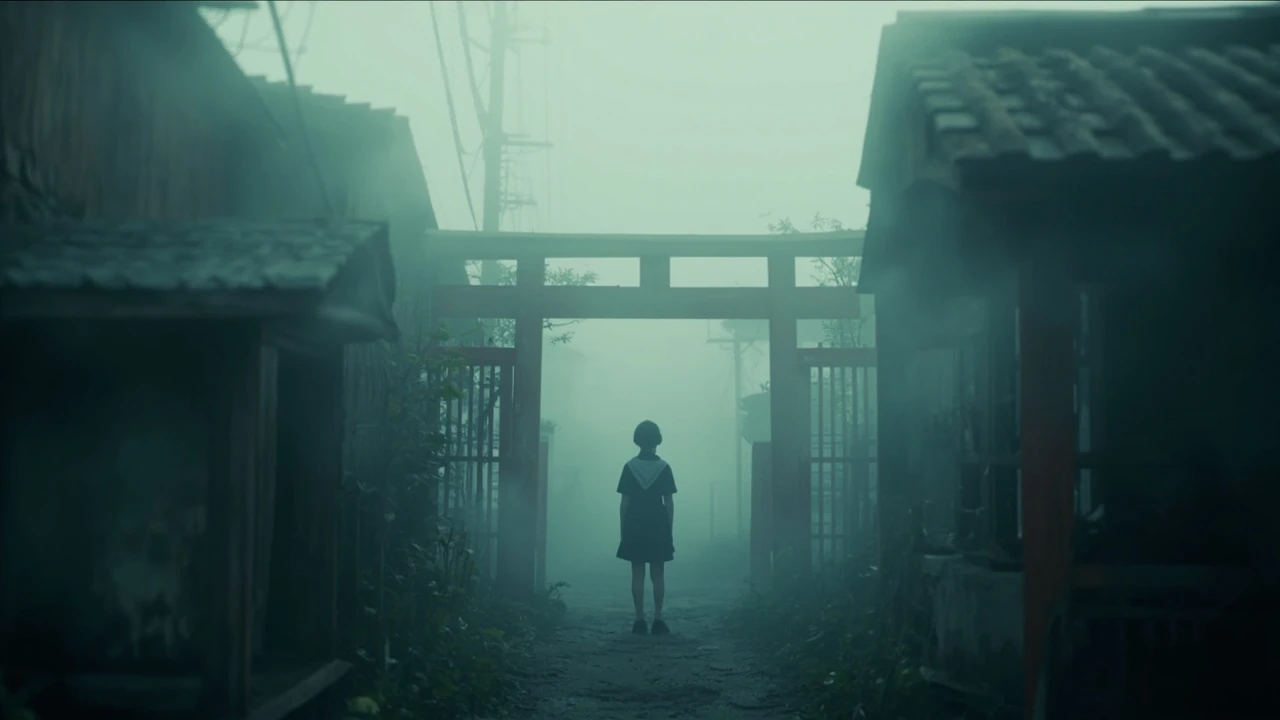
Silent Hill f is structured around a single playthrough that branches through player choice, and the silent hill f endings are reached by satisfying conditions layered across a relatively short chapter list. The game places protagonist Higurashi Hinako in Ebisugaoka, a fictional 1960s Japanese town draped in a slow, ritualistic fog, and the way she responds to the people around her shapes which of the multiple conclusions the player eventually sees. Because the title is a tightly authored experience with deliberate pacing, the endings are less about a long list of collectibles and more about a small number of weighted decisions, each gated by the choices that came before it. The protagonist’s school uniform, the half-remembered shrine at the edge of town, and the older friend who keeps offering her tea all function as decision surfaces, and each one is wired into the route the player is currently walking.
This guide treats silent hill f endings as a design object first and a player checklist second. It walks through the route structure, the kind of choices the system tracks, the common terminology the developers and press have used, and the practical differences between a clean first run and a deeper follow-up. It is written for a reader who wants to understand the branching model so they can plan a run, or so they can analyze how the narrative is engineered on top of a relatively constrained set of decision points. The same content is also useful for readers who simply want to know which finale they are likely to see on a given weekend, because the route system is dense enough that a small number of misread lines can change the ending without the player noticing until the credits roll.
How the branching system is built around endings
The route system in Silent Hill f sits on top of a chapter structure that is closer to a visual novel than to a free-roaming action game. The exploration sections, where Hinako can move through environments and inspect objects, are bracketed by key story beats in which the writing and the player’s response determine the next section. The choices that matter most are not scattered randomly across the map. They tend to cluster around a small number of scenes, often conversations with named characters or a moment of reflection that the game explicitly frames as Hinako’s inner voice. Recognizing these moments is the foundation for reaching every silent hill f ending, because the game rewards pattern recognition more than mechanical execution. The combat encounters, when they happen, are framed as interruptions of those scenes rather than as the main content of the chapter.
Internally, the system tracks two related but distinguishable ideas. One is the protagonist’s disposition, often described as a loyalty or sympathy value, which shifts as the player picks certain dialogue or action options. The other is a more binary state that the game uses to lock or unlock the deepest routes. Together, these create a small decision tree rather than a sprawling branching RPG, which is part of why silent hill f endings are widely discussed despite the relatively short runtime of a single playthrough. The decision tree is also why the game has been compared to other tightly authored horror narratives in coverage, because the player can usually only see a slice of it on a first run and needs to replay to grasp the rest.
The main ending categories the developers have referenced
Although the full terminology is not always translated identically, the silent hill f endings discussed by the developers and press fall into a small set of named routes. Players planning a completionist run usually need to keep these categories separate from the start, because a single early choice can already push the playthrough toward one path and make the others inaccessible without a reload. Coverage of the title has settled on a working vocabulary, and that vocabulary is worth learning before a first run because it gives the player a way to talk about routes that are otherwise conveyed through environmental cues, color grading, and stylized cutscenes.
- A “good” or red-cordial route, often described in coverage as the path where Hinako maintains her strongest connection to her closest friend and rejects the influence of the town. The “red cordial” label comes from a recurring prop in the game that the press has used as shorthand for the relationship the protagonist is trying to preserve.
- A “neutral” or middle path, in which the protagonist survives but resolves the central conflict through compromise, leaving several emotional threads unresolved. This is the route most often reached by players who try to play the game as a careful, even-handed observer.
- A “bad” or surrendering route, in which Hinako accepts the town’s logic and is consumed by it, typically the most visually disturbing and thematically bleak of the standard silent hill f endings. The art direction of this route reuses assets from earlier chapters in darker color palettes, and several recurring motifs are turned against the protagonist.
- An “ultimate” or deepest path, gated by specific conditions and the protagonist’s disposition, which rewrites large parts of the late game and is the route most players treat as the true narrative conclusion. The deepest path is the one developers have referred to in interviews as the route “in which the protagonist stays true to her own arc.”
These names are working labels. They exist because players and outlets need a shared vocabulary to discuss routes that are otherwise conveyed through environmental cues and stylized cutscenes. When the developers talk about “the path that stays true to the protagonist,” they are almost always describing the conditions that lead to a particular category, not a checklist of items. The same labels also appear in walkthroughs and forum discussions, so learning them up front makes the rest of the route conversation much easier to follow.
Choice conditions that lock in each ending
Each silent hill f ending has its own gating logic, and understanding the difference between an explicit choice and a hidden condition is the most common source of confusion. Some routes are determined by a single high-stakes prompt in the late game, but most are determined by a pattern of smaller decisions that the player has been making since the early chapters. The table below summarizes the route categories, the type of decision that drives them, and the practical implication for a single playthrough.
| Route category | Primary driver | Typical trigger moments | Practical implication for a first run |
|---|---|---|---|
| Red cordial / good | Strong sympathetic choices, especially toward the protagonist’s closest friend | Dialogue selections in early chapters; reaction prompts in shared scenes; one optional exploration moment in the mid-game | Usually the default path for players who avoid aggressive or self-serving options |
| Neutral / middle | Mixed disposition, including moments of hesitation or pragmatic response | Choices that protect Hinako but avoid deeper loyalty to any one character; one early-chapter dialogue branch | Commonly reached when the player is uncertain or tries to play cautiously |
| Bad / surrendering | Consistent rejection of supportive relationships, acceptance of the town’s logic | Several dialogue options in the middle chapters; certain non-interactive scenes; one late-chapter prompt that the player cannot refuse | Frequently the route that players accidentally see if they treat the title as a typical horror game |
| Ultimate / deepest | Disposition set to maximum sympathy with a key character, plus one or more late-game binary conditions | A late dialogue choice that requires the correct accumulated state; sometimes a return to a previously visited location; a specific reflection prompt in the final chapter | Requires a deliberate run with knowledge of the route or a guide; cannot be reached through accident |
A second table can be useful for players who want to compare how the routes differ in presentation rather than in gating logic. The table below summarizes the visual and tonal differences between the four categories, which are easier to recognize on a second playthrough than on a first.
| Route category | Color palette in finale | Protagonist’s framing | Resolution of the central relationship |
|---|---|---|---|
| Red cordial / good | Warm reds and yellows, with extended daylight sequences | Hinako is shown in three-quarter view, often in motion | Open, but with one unresolved thread |
| Neutral / middle | Muted greens and greys, with overcast lighting | Hinako is shown in profile, often still | Ambiguous, framed as a pause rather than an answer |
| Bad / surrendering | Heavy black, with desaturated reds | Hinako is shown from behind, often receding from the camera | Closed, in a way that mirrors the town’s logic |
| Ultimate / deepest | Crimson and bone-white, with high-contrast lighting | Hinako is shown in full frontal framing, often against a ritual motif | Resolved, but at the cost of reframing earlier events |
These two tables are not literal checklists. They are maps of the decision shapes the game tests and the visual shapes the routes produce. Each row represents a different pattern of how the player is expected to engage with Hinako’s relationships, and each row in the second table represents a different way the game frames the protagonist once the pattern is fully expressed. The silent hill f endings themselves are what the game reveals once one of those patterns is complete.
Disposition, loyalty, and the hidden state the game tracks
Most silent hill f endings are gated less by a single dramatic choice and more by a quiet accumulation of small signals. The For additional context, protagonist’s disposition toward a specific character, most often the figure the press has framed as her closest friend, is the most visible example. When the game asks the player to choose a response, the options are rarely framed as a clean binary. They are presented as small shifts in tone, and the system reads those shifts as either pulling Hinako toward a relationship or pushing her away. The shift is usually a single word in a longer line, which is part of why new players often do not notice that they have made a route-defining decision at all.
The hidden state that locks the deepest route is more specific. It usually requires the disposition to be set to a particular value and then asks the player to confirm or refuse a high-stakes decision at a very specific point in the late game. Players who reach this state often describe the moment as a feeling that the game has been “waiting” for them, because the prompt uses language that only makes sense after a long sequence of sympathetic choices. The phrase “stay true to the protagonist” that appears in developer interviews is best understood as this hidden state, not as a general moral message. The hidden state also has a counterpart in the bad route, in which the same late-game prompt appears but is phrased as a refusal rather than a confirmation, and the system reads that refusal as acceptance of the town’s logic.
Players who want to optimize for silent hill f endings therefore have to think in two layers at once. The first layer is the immediate response, the line that feels right in the moment. The second layer is the long arc, the question of whether that response is helping the player hold a particular pattern or break it. Most accidental bad endings come from players who only think about the first layer, and most accidental neutral endings come from players who try to be fair to everyone and end up committed to no one. The same two-layer model explains why some first runs feel coherent and others feel like the protagonist has been pulled in several directions at once, because the game is reading the second layer whether the player is aware of it or not.
Where the choices actually appear
Because the game does not flag every decision, new players often do not realize how many silent hill f endings a single playthrough can quietly close off. The list below describes the most commonly cited moments where the player’s response carries route-level weight, along with a note about what kind of signal the moment is sending.
- An early conversation in which Hinako and her friend discuss why the town feels wrong. The chosen tone here sets the trajectory for the rest of the run, and the system reads a hesitant or deflective answer as the first step toward the neutral route.
- A scene in the middle chapters where a character offers help that comes with a cost. Accepting or refusing is a meaningful route signal, and the cost is usually framed in a way that makes the “right” answer depend on which route the player is already walking.
- A late-game reflection in which the protagonist is asked to choose between two memories. This is the prompt most often associated with the deepest path, and it is the one that the route system is most clearly “waiting” for.
- An optional exploration opportunity that returns the player to a previously visited location. Returning is often a hidden condition, not a flavor option, and the location in question usually contains one small prop change that the system reads as a route signal.
These moments are not hidden, but they are easy to overlook because the game does not announce that they are decision points. For players planning to see more than one of the silent hill f endings, treating every conversation and every optional path as a potential route signal is a safer approach than trying to remember which scenes “really matter.” A useful rule of thumb is that any scene in which the protagonist is asked to choose a word rather than an action is a route candidate, and any scene in which the protagonist is asked to choose an action is usually a combat or exploration event rather than a route candidate. That rule is not perfect, but it correctly identifies most of the route-defining moments in a first run.
A practical first-run plan
Players approaching the game for the first time usually want to know which of the silent hill f endings they are most likely to reach without a guide, and which one they are most likely to miss. The practical answer is that the first playthrough almost always lands in one of the three standard routes, and the deepest path is normally the only one that requires planning. The neutral route is the most common accidental landing for players who try to be even-handed, and the bad route is the most common accidental landing for players who treat the title as a typical survival horror experience and try to minimize their engagement with the supporting cast.
A reasonable first-run plan therefore looks like this. Play the game without worrying about optimization and pay attention to the protagonist’s internal reactions. Most players will naturally land in the route that matches their instincts. If the result is unsatisfying, a second run is more efficient than trying to reverse-engineer the conditions in a single playthrough, because the route system is dense enough that reload planning in a new save is faster than managing several parallel conditions in one file. Treat the first run as an orientation pass and the second run as the one that is designed to reach a specific endpoint. The same plan also makes a third run easier, because the player will have already seen the route-defining prompts in the first two runs and can plan the third run around the deepest path without having to discover those prompts from scratch.
Differences between endings in presentation and meaning
Silent Hill f endings are not just mechanically different. They are visually and tonally distinct, and that difference is part of the design. The game’s art direction deliberately makes the good and ultimate routes feel like the protagonist is being allowed to leave, while the surrendering route uses the same visual vocabulary in a way that traps her. A reader analyzing the title as a game design object should treat that contrast as the most important content of any single ending, not as a reward for correct play. The contrast is also the reason the routes are discussed in design circles as a single object, because each ending is best understood as a different reading of the same visual language rather than as a separate reward tier.
It is also worth noting that the standard routes tend to leave specific narrative threads unresolved in ways that only make sense in light of the deepest path. Players who see the good or bad ending first often notice plot elements that do not pay off. Those elements are not bugs. They are conditions for the path the player did not take, which is one reason the game is often discussed as a structure rather than as a sequence of scenes. A For additional context, meaningful analysis of silent hill f endings therefore usually begins with the deepest path and works backward, because the other routes are best understood as the conditions that the deepest path is rejecting or absorbing. The same structure also explains why some players describe the deepest path as a “re-read” of the earlier chapters, because the late-game prompt reframes several earlier scenes as part of a single ritual rather than as a series of local decisions.
What a completionist run looks like
For players who want to see every silent hill f ending in a planned sequence, the most efficient approach is to use separate save files per route rather than to overwrite a single playthrough. Because the deepest path is gated by a hidden state, attempting to chase it after a neutral run usually requires reloading a save from before the late-game prompt, and reloading from the very beginning is often faster. A typical completionist sequence follows a familiar pattern, and the sequence below is the one most coverage and walkthroughs converge on because it minimizes the number of reloads per route.
- First run: play for the route that matches the player’s instincts, usually the good or neutral path. The good path is a useful first target because it is the one most players are emotionally prepared to walk, and it surfaces most of the route-defining prompts in a clear order.
- Second run: replay from the start, choosing responses that push the protagonist’s disposition in the opposite direction, usually toward the bad or surrendering route. This run is also a useful reference for the third run, because the bad route reuses several scenes from the good route in a darker palette.
- Third run: replay specifically to satisfy the hidden conditions for the deepest path, using the prior runs as a reference for where the route-defining prompts appear. By the third run, the player usually knows which lines carry route weight and can plan a single deliberate run without heavy reloading.
The number of runs a player needs depends on how cleanly each playthrough lands. Players who understand the route shapes from coverage and developer interviews can sometimes combine the neutral and bad routes into a single run, but most players will find three deliberate runs more efficient than a single run with heavy reloads. The silent hill f endings reward a patient approach because the route system is dense and the late-game prompt is unforgiving about accumulated state. A patient approach also has the side benefit of making the deepest path feel earned, because the player has already seen the other routes and can read the late-game prompt as a deliberate reframing rather than as an unfamiliar decision.
Common mistakes that lock players out of routes
Most reports of “missed” silent hill f endings fall into a small number of recurring patterns. The first is treating the game as a typical survival horror title and avoiding optional conversations on the assumption that the player is short on time. In practice, optional scenes in this title are often the route-defining moments, because they are where the protagonist’s disposition is reinforced or weakened in the absence of pressure. Skipping them is one of the most reliable ways to lock the player out of the deepest path without realizing it.
The second is assuming that picking the kindest-sounding response is always correct. Some of the kindest responses in the early chapters are actually neutral or slightly negative route signals, because the game frames them as Hinako being polite rather than genuinely engaged. Players who want the good or deepest path usually have to select the response that is emotionally open, not the one that is socially safe. The same pattern shows up in the late game, where a “kind” refusal can be read by the system as a confirmation of the bad route because the system is looking for engagement rather than for politeness.
The third is over-relying on online walkthroughs that describe only the late-game prompt. Because the silent hill f endings are gated by accumulated state, a player who reads only the final choice and selects it in isolation will often find that the route does not trigger. The late prompt is the lock, but the early choices are the key. Planning the whole run around the lock is one of the most common reasons a first run feels like it ended “wrong.” A related mistake is reading a walkthrough for one route and applying its conditions to a different route, because the system reads the same line differently depending on which route the player is already walking.
The fourth is assuming that the game is tracking a visible stat. The system does not show the player a disposition meter, and it does not flag which lines are route-defining, so players who try to “play around” the system usually end up missing the conditions entirely. A more reliable approach is to play the run as if the protagonist’s disposition is being read in real time, because that is closer to what the system is actually doing. The same approach also produces a more coherent playthrough, because the player is responding to the scene as a scene rather than as a checklist.
How the ending system compares to the wider series
Silent Hill as a franchise has historically used multiple endings as a way of expressing moral and psychological states, and silent hill f endings fit that lineage. They are not unlockable rewards in the conventional sense, and they are not designed to be ground out with collectibles. They are authorial positions: each one is a statement about the protagonist, the town, and the player’s willingness to engage with the game’s emotional logic. Comparing them to the broader series is useful because it clarifies what kind of experience the developer intended, but it can also mislead players who expect the standard “UFO ending” or joke endings that appear in other entries. The game is more serious about its branching than that, and the silent hill f endings are closer to a literary structure than to a series of unlockable rewards.
For an analysis grounded in the title itself, the most useful comparison is not to a specific previous entry but to the franchise’s general approach to endings, which is to make the player’s disposition the central mechanic and to use endings as the resolution of that mechanic. Readers interested in that lineage can review the broader history of the series through its general reception and design background, while players more interested in the regional and regulatory context around the title’s release can read the public reporting on its Australian classification history for additional context on the kind of content the routes address. The Australian classification history is also a useful reminder that the routes are not designed to be moderated down, because the title’s refusal of classification in that region was based on the game’s content rather than on its branching structure.
Reading the endings as a design object
For a reader who is more interested in the construction of silent hill f endings than in the route checklist, the most useful approach is to treat each ending as a different reading of the same story. The bad ending is the story read literally, with the town’s logic taken at face value. The neutral ending is the story read defensively, with Hinako surviving but refusing to commit. The good ending is the story read relationally, with the protagonist anchored to a single person. The deepest path is the story read mythically, in which the town is reframed as a ritual space and the protagonist’s choices are reinterpreted as part of a much older pattern. Each reading is internally consistent, and the game does not signal that one reading is “correct” in the way that a more mechanical branching structure would.
This reading is consistent with how the developers have described the game in public-facing material, and it is also consistent with the visual language of the routes. The art direction, the music, and the pacing of each ending reinforce that interpretive frame. Players who want to extract the most value from the silent hill f endings often find that the deepest path is less interesting as a reward than as a lens through which the other routes can be reread, and that the neutral path is more useful as a baseline than as a destination. The same lens is also useful for design analysis, because it explains why the late-game prompt is phrased the way it is and why the same line can be read as a confirmation or a refusal depending on the route the player has been walking.
How long a run takes, and what the player actually sees
A single playthrough of Silent Hill f is short relative to most modern action-horror releases, and the shortness is part of why the routes are so widely discussed. A clean first run usually lands in the seven-to-ten-hour range, with the variation driven mostly by how much optional exploration the player chooses to do. A planned completionist run, in which the player is going for all four routes, usually takes between twenty-five and thirty-five hours depending on how much backtracking the player is willing to do in a single file. Players who use separate save files per route can usually bring the total down, because they avoid the reload overhead that comes with trying to chase multiple routes in a single playthrough.
The shortness also has implications for how the routes are paced. Because the game is moving quickly through its chapters, the route-defining choices are clustered more tightly than they would be in a longer title, which is part of why a single early decision can lock the player out of multiple endings at once. The same clustering is also why a first run can feel coherent even when the player is not paying attention to the route system, because the game is making most of its route decisions in a small number of scenes rather than spreading them across a long campaign. Readers who want a more granular sense of where the choices land can map the route-defining prompts against the chapter list, which makes the clustering easier to see at a glance.
What the routes reveal about the protagonist
One of the more useful ways to read silent hill f endings is as a series of statements about Hinako herself, rather than as a series of statements about the town. The good and deepest routes frame her as a person who can hold a relationship under pressure, and they treat the town as a test of that capacity. The neutral route frames her as a person who can survive but not commit, and it treats the town as a series of obstacles rather than as a single test. The bad route frames her as a person who can be absorbed by the town’s logic, and it treats the town as a system that the protagonist is joining rather than resisting. Each frame is consistent with the protagonist’s earlier behavior in the chapter list, which is part of why the routes feel earned even when the player has not been planning them.
The same framing also explains why the deepest path is often described as the most “complete” ending, because it is the one in which the protagonist’s capacity is tested most directly and the one in which the town is reframed as a ritual rather than as a threat. Players who reach the deepest path often describe it as a resolution rather than as a reward, because the late-game prompt is asking the protagonist to confirm the capacity that the earlier chapters have been building. The same reading is also useful for design analysis, because it explains why the game does not surface a disposition meter: the system is asking the player to read the protagonist as a person, not as a stat block, and surfacing the meter would undermine that reading.
Practical notes for a planned run
A few practical notes are worth keeping in mind for readers who are planning a route-specific run rather than a casual first playthrough. The first is that the route system reads patterns, not single lines, so a player who is trying to reach the deepest path should plan the early chapters as carefully as the late game. The second is that the optional exploration moments are usually route-defining, so they should be treated as required content rather than as flavor. The third is that the late-game prompt is the same for several routes, and the system determines which route is being walked by reading the accumulated state, which means that the same line can be the right answer for one route and the wrong answer for another.
A fourth note is that the game’s save system is designed around single playthroughs, so players who want to see every silent hill f ending are better off using separate save files per route rather than trying to chase multiple routes in a single file. A fifth note is that the title’s regional classification history does not affect the route content, but it does affect the platforms on which the player can run the game, and players who are planning a completionist run should confirm that their platform has access to the uncut version of the title before they begin. A final note is that the deepest path is the one most worth planning for, because it is the route that requires the most preparation and the one that rewards the most careful reading of the earlier chapters.
Frequently asked questions
How many silent hill f endings are there?
There are multiple silent hill f endings, organized into a small set of named routes rather than a long checklist. The standard set includes a good, neutral, and bad route, plus an ultimate path that is gated by specific conditions. The exact number of named routes is small, but the conditions that determine them are layered, so the practical experience is closer to a tight decision tree than to a list of unlockables.
Do I need multiple playthroughs to see every ending?
Yes, in most cases you need at least two deliberate playthroughs and usually three if you want to see the deepest path. The route system does not allow the player to switch branches mid-run, and the late-game prompt that gates the ultimate path is unforgiving about accumulated state, so reloading from the start of a run is the most reliable way to reach a different route.
Can I reach the deepest ending on my first run?
It is possible but not likely. The deepest path requires a specific accumulated disposition and at least one hidden condition, and a player who does not know the shape of the route will usually land in one of the three standard routes first. Many players treat the first run as an orientation pass and the second or third run as the planned attempt at the deepest path.
Are silent hill f endings decided by collectibles or by choices?
They are decided by choices. There are no collectibles that directly unlock a particular ending, and exploration primarily serves to surface the scenes where the route-defining choices appear. The game’s branching is narrative in nature, so the route is determined by what the player says and how the protagonist reacts, not by what the player picks up.
What is the difference between the good and the deepest ending?
The good ending is a satisfying resolution in which the protagonist maintains a strong relationship and leaves the town on her own terms. The deepest ending goes further, reframing the late-game events as part of a much older pattern and resolving threads that the good ending leaves open. The deepest ending is not a “better” version of the good ending in a mechanical sense. It is a different interpretation of the same story, and its conditions are designed to make that difference meaningful.
Do the silent hill f endings change based on difficulty or combat performance?
No, the endings are not tied to combat performance or to a difficulty setting. The route system reads the player’s narrative choices, not their mechanical skill, so a player who plays the game on the easiest setting and makes the right choices will reach the same ending as a player who plays on the hardest setting. This is part of why the title is often discussed as a structural or literary experience rather than as a combat challenge.
Is it possible to see the bad ending on purpose?
Yes, and many players do. The bad ending is reached by consistently making choices that push the protagonist away from her closest relationship and toward the town’s logic, and a planned run toward the bad ending is a common second playthrough because it requires a very different disposition from the good route. Players who want to see the full set of silent hill f endings usually plan a run toward this route early, because it is the easiest to lock in once the player knows the pattern.
Does the game tell me which route I am on?
No, the game does not explicitly tell the player which route is being tracked. The route-defining choices are presented in the same visual style as the rest of the dialogue, and the system does not surface a “disposition” value to the player. This is part of the design, because the silent hill f endings are meant to be discovered as interpretations of the protagonist’s behavior rather than as the result of a visible stat.
Are silent hill f endings affected by save data from a previous game?
No, the route system is contained within a single playthrough. The endings are determined entirely by choices within the current run, and the game does not carry over state from one playthrough to the next. This is one reason a planned completionist run usually uses multiple save files rather than a single long playthrough with reloads.
What is the best way to start planning a route-specific run?
The best starting point is to play a first run without planning, observe which of the standard routes the playthrough lands in, and then plan the second run as a deliberate inversion. For the deepest path, the most efficient approach is to map the late-game prompt first and then work backward through the chapters to identify the choice points that need to be reinforced. Treating the silent hill f endings as a pattern of responses rather than as a checklist is the strategy that most reliably reaches the intended route.


Leave a Reply