Why Partnering with a Game Outsourcing Company Accelerates Development
Game development has changed completely over the past decade. Budgets are higher, tech stacks are more complex, and players expect perfection on launch day. Trying to handle every single asset, line of code, and animation cycle in-house is often a fast track to burnout.
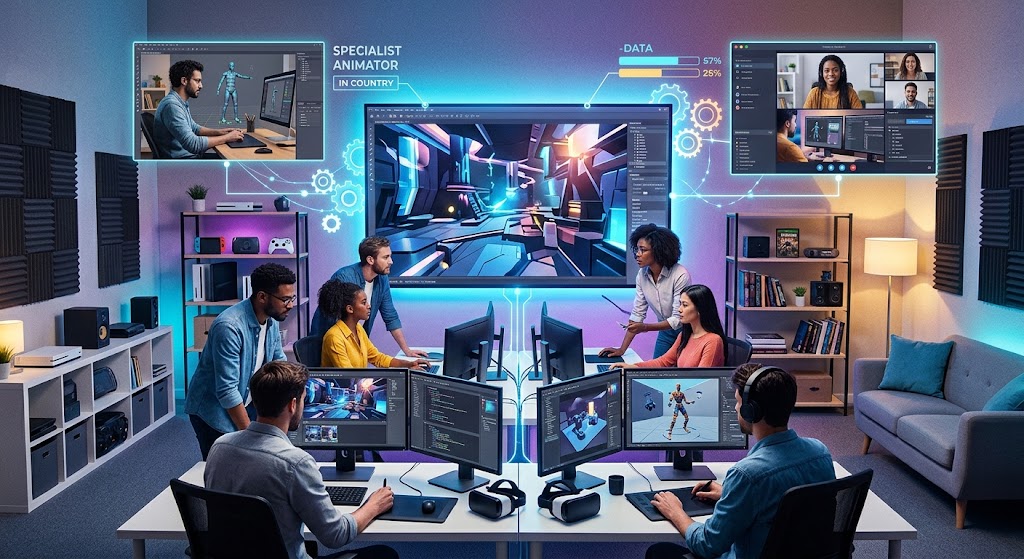
That is where external support steps in. A modern game outsourcing company does far more than just take on extra work. It acts as an extension of your core team, absorbing workload spikes so your core creators can focus on big-picture mechanics and vision.
Think about the sheer scale of modern titles. You need hundreds of 3D models, complex character rigs, thousands of sound effects, and clean, bug-free code. Scaling your full-time staff up and down for each project phase is expensive and messy. External teams solve that precise problem.
When you work with a trusted partner, you gain instant access to specialized talent. Need a seasoned UI designer who understands complex menu trees? Or maybe a technical artist skilled in custom shaders? Finding, interviewing, and onboarding those roles full-time takes months. Outsourcing brings them to your pipeline in days.
It also gives you financial flexibility. Production phases are naturally uneven. Pre-production requires a lean team, while full production demands maximum bandwidth. External resources let you dial capacity up or down based on your actual burn rate and milestone map.
Ultimately, external collaboration keeps your release date intact. Deadlines slip when internal teams get overwhelmed by repetitive tasks or niche technical hurdles. Delegating specific deliverables helps keep your sprint momentum high and your launch target realistic.
Choosing the Right Game Outsourcing Company for Your Pipeline
Not every external studio will fit your specific workflow. Finding the right game outsourcing company requires looking closely at how their technical stack aligns with your internal engine and production culture.
Start by evaluating their recent portfolio. Look past the polished render shots and dig into actual engine performance. Ask if their assets were built for realtime engines, how clean their topology is, and whether their code follows standard optimization protocols.
Communication style matters just as much as technical skill. If an external group takes three days to answer a basic query during sales calls, imagine how slow feedback loops will be during crunch time. You need transparent, rapid communication from day one.
Here are key operational traits you should evaluate during initial technical screening:
- Engine proficiency in Unreal Engine 5, Unity, or proprietary studio tools.
- Clear data security protocols, strict NDA compliance, and robust asset protection measures.
- Transparent time-tracking software and real-time project management board visibility.
- Dedicated lead artists and technical directors who oversee internal quality control.
- Demonstrated experience in your specific genre, whether RPG, shooter, or mobile strategy.
Integrating an external group takes active management. Set clear asset guidelines, share detailed art bibles, and provide explicit technical documentation before work begins. Early preparation prevents painful rework later in the milestone schedule.
Treat external developers like core team members. Include their leads in key standups, grant them access to shared Slack channels, and offer constructive feedback fast. Strong relationships always yield higher quality work.
Services Provided by an External Production Partner
Game creation spans dozens of distinct disciplines. A full-service game outsourcing company usually offers modular teams tailored to specific technical needs, whether you need full game co-development or simple asset creation. 3D Art & ModelingEnvironments, characters, hard-surface props, texturesRapid asset generation without expanding internal art desksConcept Art & DesignCharacter sheets, mood boards, key art, UI/UX wireframesEstablishes visual style early during pre-productionAnimation & RiggingSkeleton creation, MoCap cleanup, custom character movementHigh-fidelity motion assets delivered production-readyEngineering & Co-DevGameplay programming, SDK integration, bug fixing, portingFills technical skill gaps and accelerates core engine tasksQuality AssuranceFunctionality testing, performance profiling, compatibility checksEnsures stable builds across varied hardware and platforms
| Service Area | Core Deliverables | Primary Studio Benefits |
|---|
Choosing between full co-development and targeted asset support depends on your team size. Small indie teams often delegate entire systems like UI or audio creation. Larger AAA studios usually outsource high-volume assets like environment props or background foliage.
Flexibility is the biggest advantage here. You do not need to sign a massive multi-year agreement for simple asset passes. You can engage external help for short three-month sprints to handle specific production bottlenecks.
Co-development model options have expanded greatly in recent years. Today, external engineers can write core engine code side-by-side with your staff, merging pull requests into your central repository daily without friction.
Quality assurance is another area where external teams shine. Setting up an in-house QA lab with dozens of mobile devices, consoles, and PC hardware configurations is cost-prohibitive for most studios. External QA groups provide instant device coverage and rigorous bug tracking at a fraction of the setup cost.
Financial and Operational Advantages of External Studios
Budget management can make or break a studio. Partnering with a skilled game outsourcing company helps protect your balance sheet while maintaining steady art and code output across long development cycles.
Full-time employees come with substantial overhead costs. Salaries, health benefits, equipment hardware, software licenses, and physical desk space add up fast. External partners absorb those fixed operational costs into flat hourly or milestone rates.
Here is how cost structures compare across production setups: Payroll & BenefitsFixed recurring monthly expenseVariable, scaled strictly to project needsSoftware & WorkstationsHigh initial capital expenditureFully included in vendor service rateRecruitment & OnboardingSignificant HR time and recruiter feesZero recruitment lag; instant team deploymentDowntime OverheadPaid during production lullsBilling stops when milestone closes
| Cost Component | In-House Production Team | External Outsourcing Partner |
|---|
Risk mitigation is another huge factor. If a project scope changes suddenly, internal teams face costly restructures or layoffs. External contracts can be adjusted cleanly as production goals shift.
Time zones can work in your favor too. Working with teams in different regions enables round-the-clock development cycles. Your internal staff passes off daily builds in the evening, and the external team works while your local office sleeps.
To maximize your return on investment, consider these operational best practices when managing external deliverables:
- Establish strict acceptance criteria for every individual milestone deliverable.
- Provide clear technical specs including polycount budgets and texture memory limits.
- Schedule regular video check-ins to discuss blocked tasks and clarify design goals.
- Maintain a centralized documentation hub using tools like Notion or Confluence.
Clear guidelines protect your budget. When an external vendor knows exact technical constraints from day one, they hit target benchmarks on the first pass, avoiding expensive revision cycles.
Scale your external headcount progressively. Start with a small test package to evaluate speed, responsiveness, and asset quality. Once the vendor proves their reliability, expand their responsibilities to larger production modules.
Integrating External Teams into Your Daily Workflow
Smooth workflow integration separates successful collaborations from messy ones. When you work with a game outsourcing company, treat communication tools as your central production engine.
Do not isolate external creators on a digital island. Give them access to your communication platforms, bug trackers, and asset management systems. The closer they are to your daily conversation, the fewer mistakes they will make.
Version control is paramount. Set up secure branch structures in Git, Perforce, or Plastic SCM so external developers can push work safely without risking core build stability. Automated build pipelines can test their submissions automatically.
Establish clear points of contact on both sides. A dedicated internal producer should manage all vendor communication, tracking incoming assets and ensuring timely feedback from internal art directors and technical leads.
Here is a list of essential tools for managing distributed production pipelines smoothly:
- Perforce or Git for secure, scalable source code and asset version control.
- Jira or Trello for detailed task tracking, sprint management, and bug reporting.
- Slack or Discord for instant daily communication and quick asset reviews.
- ShotGrid or Frame.io for visual feedback and frame-by-frame art reviews.
Cultural alignment matters more than most directors realize. Shared enthusiasm for the game concept drives higher quality work. Share your design pitch decks, character lore, and vision documents so the vendor team feels invested in the product outcome.
Finally, track performance metrics consistently. Monitor revision rates, delivery timelines, and build integration errors. Transparent data helps both teams optimize processes over multi-year production schedules.
Frequently Asked Questions
What Is a Game Outsourcing Company?
A game outsourcing company is an external studio that provides specialized production services to game developers and publishers. These services range from 3D art modeling, animation, and sound design to full software engineering, QA testing, and console porting.
How Does Working with an External Game Studio Save Costs?
It reduces fixed operational overhead like full-time salaries, healthcare benefits, physical office space, and expensive software licenses. Studios only pay for external work when active production requires expanded headcount, eliminating paid downtime between project phases.
What Production Services Are Most Commonly Outsourced?
High-volume visual assets like 3D environment props, character models, and animation cycles are the most commonly outsourced elements. However, studios also frequently outsource specialized technical tasks like QA testing, UI design, audio production, and console platform porting.
How Do Game Studios Protect Their Intellectual Property?
Studios protect their IP through strict non-disclosure agreements, secure access controls, and compartmentalized file sharing. External partners are granted access only to the specific assets and code modules necessary to complete their assigned tasks within secure version control branches.
What Is the Difference Between Co-Development and Asset Outsourcing?
Asset outsourcing involves creating discrete visual or audio files based on precise specs provided by the lead studio. Co-development is a deeper technical partnership where external programmers and designers build core engine features, systems, and gameplay mechanics alongside the internal team.
How Do You Manage Quality Control with External Developers?
Quality control is managed through detailed technical art bibles, strict polycount guidelines, precise milestone acceptance criteria, and regular feedback loops. Internal art directors and tech leads review deliverables at scheduled intervals before work is approved and integrated into the main engine build.
Can Small Indie Studios Benefit from Game Development Outsourcing?
Yes, indie studios benefit greatly because external partners allow small teams to punch above their weight. By outsourcing specialized tasks like character rigging, porting, or soundtrack composition, small indie teams can maintain high visual and technical standards without hiring full-time specialists.
Final Thoughts on External Game Production
Building modern games is a complex, high-stakes endeavor that demands agility, deep technical expertise, and smart resource management. Partnering with a reliable external studio gives your core team the room to focus on creative vision while maintaining steady production speed across every milestone. By establishing clear technical guidelines, maintaining transparent communication, and choosing a vendor aligned with your studio culture, you can scale production effectively, stay within budget, and deliver memorable gaming experiences to players worldwide.





Leave a Reply