
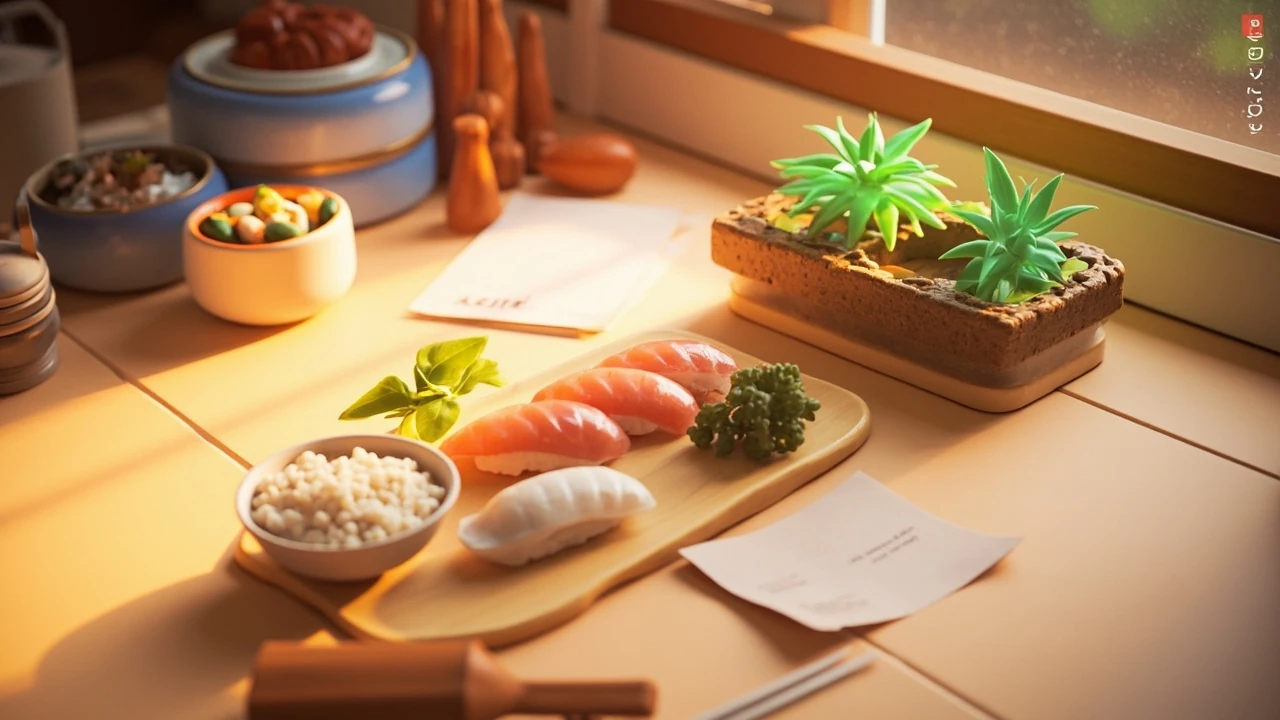
Sushi recipe grow a garden: how the Roblox cooking loop actually works
The phrase sushi recipe grow a garden comes from a corner of Roblox where two seemingly unrelated systems meet: a small farming sandbox built around crop timers, mutations, and pet labor, and a culinary minigame that turns the harvest into prepared dishes. The result is a tight, satisfying loop where what you plant this morning becomes the rice, garnish, or seaweed in a dish you eat this evening. Understanding that loop matters whether you play the game for fun or you are a game designer studying how light systems can carry real progression weight without becoming two separate games stapled together.
This article treats the topic as a GameDev subject. The first half walks through the in-game cooking system as a player would experience it, with enough specificity that a new player can plan a route to the sushi bench. The second half is a structured design analysis of how a “sushi recipe grow a garden” interaction is engineered: the data tables, growth timers, ingredient matching, mutation handoffs, and player economy that make a recipe book feel responsive. The goal is a single page that is useful at the stove and useful at the editor desk.
What the phrase actually refers to in the live game
Within Grow a Garden, the term denotes the full chain that begins with planting a seed, watering it through a growth cycle, harvesting one or more crops, and then taking those crops to a cooking station where they can be combined into a named dish. Sushi is one of several dish families in that cooking layer. The garden half is responsible for ingredient quality and quantity, and the recipe half is responsible for turning those ingredients into a finished item with its own stat profile. Player discussions of a “sushi recipe grow a garden” almost always start from the cooking table and work backward into the garden to plan which seeds to plant and when to water them so the ingredients are ready at the right moment.
From a design perspective, this is interesting because the cooking layer is not a separate game. It reuses the same inventory, the same growth pipeline, and the same economy of value that the gardening sandbox already established. The recipe book is a thin layer that translates an existing resource graph into a new interaction surface, which is why a single feature can shift how players prioritize plots, pets, and time of day.
The cooking system at a glance
The cooking system sits on top of the gardening sandbox and inherits nearly every mechanic the garden already defines. Before diving into the sushi recipe specifically, it helps to see the system as a whole, because the sushi recipe is unusual only in the ingredients it demands; the underlying logic is the same one every dish uses.
When a player approaches a cooking station, the station reads the player’s inventory, filters ingredients that match the current recipe book, calculates a quality score from each ingredient’s mutation and growth history, and either accepts or rejects the combination. A successful cook returns a finished dish, a cooking XP reward, and in some cases a pet affinity bonus. A failed cook consumes the ingredients but returns nothing, which is the main cost the player is trying to avoid.
Core components every cook uses
- Recipe book: a player-side collection of dish definitions, each with a name, ingredient slots, accepted ingredient types, and a target quality threshold.
- Ingredient inventory: the harvested crops, foraged items, and rare drops stored in the player’s bag. The book reads this directly.
- Quality score: a per-ingredient value derived from the crop’s variant, mutation count, and growth conditions. Higher quality pushes the final dish up a tier.
- Cooking station: an object placed in the world that owns the cook transaction, fires the result event, and rewards the player.
- Recipe XP and unlocks: a per-recipe progression track that gates higher-tier versions of the same dish behind repeated cooks.
None of these are exotic on their own. What makes the cooking system feel coherent is that each component reads from data the garden already produces. The garden decides whether an ingredient is a “mutated carrot” or a “golden carrot,” and the cooking book simply checks for a flag. Designers did not have to invent a parallel economy; they mapped the existing one onto a new verb.
Why a sushi recipe works as a teaching example
Sushi is one of the denser recipes in the book, which is why the phrase circulates among new players. It asks for at least three distinct ingredient categories: a starch base, a protein, and a garnish. Most simple recipes ask for one or two categories, and a few ask for four. Sushi is unusual because the three categories have very different growth profiles in the garden: one ingredient grows quickly in a small plot, another takes a long timer that competes with the player’s pet feeding schedule, and the third depends on a rare mutation. Sushi therefore illustrates the full life cycle of the cooking layer in one recipe, which is why it is so often the first dish new players attempt to learn.
Step-by-step: cooking a sushi dish from a fresh save
The fastest way to understand a recipe is to cook it once. The following sequence assumes a new player who has just unlocked the cooking station and is working with a single small garden plot. Every step is the kind of decision a designer would want to log, because each one is a system boundary between the garden and the recipe.
- Unlock the cooking station: the cooking station is unlocked through a short tutorial quest that introduces the recipe book and walks the player through a no-cost cook. The station is portable and can be placed near the garden to reduce travel time.
- Open the recipe book and find the sushi entry: the sushi entry is locked by default. The lock is purely a tutorial gate, not a skill check, and it opens once the player has cooked any two simple dishes. This pattern keeps the early progression linear without punishing experimentation.
- Inspect the ingredient list: the book shows three ingredient slots and the ingredient types each slot accepts. A common sushi configuration is a rice-equivalent starch, a fish or seaweed protein, and a vegetable garnish. Each slot lists multiple accepted crops rather than a single required crop, which gives the player flexibility.
- Plan a planting cycle: at this point the player is back in garden design mode. They need to estimate how long each ingredient will take to grow, schedule waterings, and ensure harvests align with the time the player will next be online.
- Plant, water, and harvest: the garden runs on a deterministic growth timer. The player waters on a schedule and harvests each crop as it ripens, checking whether each harvest is a normal or mutated variant.
- Bring ingredients to the cooking station: the station reads inventory, validates the combination, and either accepts the dish or rejects it with a short message explaining which slot failed.
- Receive the finished dish and update the recipe book: on success, the recipe book records the cook, awards XP, and may unlock a higher-tier version of the same dish with stricter ingredient requirements.
The cycle is short enough to repeat several times in a single play session, which is a deliberate design choice. Cooking is a sub-loop inside the larger gardening meta-loop, and the sub-loop must close quickly to keep the player engaged between long growth waits.
Ingredients in detail: what sushi actually asks for
Recipes in the cooking layer are defined by ingredient slots, not by specific crops. A slot is a description of an ingredient type with a list of crops that satisfy it. The slot system is what lets designers add new crops to the garden without rewriting the recipe book, and it is what lets players substitute a crop they already grow for one they have not planted yet. The table below summarizes a representative sushi configuration.
| Slot | Accepted ingredient type | Example crops | Typical growth time | Quality notes |
|---|---|---|---|---|
| Starch base | Starchy crop | Rice grain, tuber, root | Short to medium | Normal variant cooks; mutated variant upgrades the dish tier |
| Protein | Sea or fish-derived crop | Seaweed sheet, kelp, fish fillet | Medium to long | Mutation quality has the largest impact on the final dish |
| Garnish | Leafy or aromatic crop | Herbs, sprouts, wasabi stand-in | Short | Often a high-mutation-rate crop, used to push the dish above the next tier |
The “typical growth time” column is descriptive, not literal. Designers tune these values continuously, and exact times change with patches. What does not change is the relative ordering: one slot is fast, one slot is medium, and one slot is the long-pole that determines when the dish can be cooked. Players who learn to schedule the long-pole first treat the rest of the recipe as filler around it.
How quality and mutation flow into the final dish
Each ingredient carries a hidden quality value computed from its variant and any mutation events that fired during its growth. The cooking station sums these values and compares the sum to a per-recipe threshold. If the sum is below the threshold, the cook fails. If the sum is at or above the threshold, the cook succeeds and the dish’s tier is set by how far above the threshold the sum landed. Mutation is therefore not decorative. It is the difference between a dish that succeeds and a dish that upgrades to a higher tier with stronger stats.
This is also the main reason players are willing to invest in long-pole crops. A short-cycle crop that is planted, harvested, and replanted every few minutes is a reliable ingredient, but it is rarely the one that pushes a dish over the next tier. The For additional context, crops that grow slowly, or that require specific weather or pet conditions, are the ones that introduce the variance the cooking system needs to be interesting.
The recipe book, XP, and unlock tiers
Every dish in the cooking layer has a per-recipe XP track. The first cook unlocks the dish at its base tier, and repeated cooks push it through higher tiers with stricter requirements. The progression is linear and visible: the recipe book shows a small bar that fills as the player cooks the dish, and the next tier is shown with its ingredient requirements and stat rewards.
From a design perspective, this is a “skill ceiling that scales with repetition” pattern. New players can cook a base-tier sushi dish with the first three crops they happen to grow. Experienced players who have learned the mutation combinations that produce high-quality ingredients can cook the same dish at a tier that requires specific mutated variants. The recipe stays the same; the player’s understanding of the garden deepens.
What the tiers actually change
- Base tier: the dish is cookable with any valid ingredient in each slot. The reward is a small amount of currency and a single point of recipe XP.
- Mid tier: at least one slot requires a mutated variant. The reward increases and may include a pet affinity bonus.
- High tier: two or more slots require mutated variants, and at least one slot requires a rare mutation that depends on weather or pet interaction. The reward is a meaningful currency bump and an unlock that affects the player’s overall garden progression.
The tiering is conservative on purpose. Each tier is reachable with a different investment profile, so a player who cannot reliably mutate the long-pole crop can still cook base- and mid-tier dishes. The system does not require mastery to be useful, but mastery produces a clear reward.
How the cooking loop affects garden planning
Cooking is the part of the game that tells the player what to grow next. Without the cooking layer, the garden’s “right” answer to “what should I plant?” is the most profitable crop at the player’s current level, which converges quickly. With the cooking layer, the answer is the ingredient that the player’s recipe book is currently pushing toward. This keeps the garden interesting because the optimal planting schedule rotates with the recipe book rather than with the crop catalog.
Players who track their recipe book progression treat the next unlock as a planning horizon. They identify the long-pole ingredient, calculate how many growth cycles that ingredient needs to reach a high enough quality, and reserve plot space for it before planting anything else. The short-cycle ingredients are planted in whatever plot space remains, because they can be grown quickly when the long-pole ingredient is ready.
Plot layout decisions driven by a sushi recipe
- Reserve the largest plot for the long-pole ingredient: a single large plot reduces the risk of variance in the long-pole crop by giving it more growing space and more chances to mutate.
- Use small plots for the starch base and garnish: these grow quickly and can be replanted many times before the long-pole ingredient is ready, so plot size is less important than plot count.
- Place the cooking station close to the largest plot: the long-pole ingredient is the bottleneck, and walking distance matters when the player is logging in briefly.
- Assign pets to the long-pole plot during its vulnerable growth phases: pets that boost mutation rate have a larger expected return on the long-pole ingredient than on the short-cycle ones.
Each of these decisions is invisible to a player who is not cooking, and obvious to a player who is. The cooking layer is therefore acting as a tutorial for the garden’s deeper mechanics by giving the player a concrete reason to engage with them.
Reading the cooking station result and reacting to it
The cooking station returns a short message after each cook. The message is the player’s main feedback signal, and learning to read it is one of the highest-leverage skills in the cooking layer. A failed cook returns a message naming the slot that failed and the threshold that the player’s ingredients did not meet. A successful cook returns the dish tier and the rewards.
A common mistake is to treat a failed cook as a setback. It is not. It is the only feedback the player has about which ingredient is the weakest link. Players who read the failure message, identify the failing slot, and plan a mutation strategy around that slot are usually cooking high-tier dishes within a few days, while players who keep cooking without reading the message are still trying to brute-force the recipe at base tier.
Failure patterns and what they suggest
| Failure pattern | Most likely cause | Suggested next step |
|---|---|---|
| Starch slot fails | Starch crop is normal variant, not mutated | Plant a few extra starch crops and watch for mutation events |
| Protein slot fails | Long-pole crop did not reach the rare mutation threshold | Reassign pets to the long-pole plot and extend its growth cycle |
| Garnish slot fails | Garnish crop was harvested early or planted in poor conditions | Replant garnish in a smaller plot with closer attention to water timing |
| All three slots fail | Recipe is being attempted at a tier the player’s ingredients cannot reach | Cook the same recipe at base tier a few times, then attempt the next tier |
The table is descriptive, not prescriptive. Real games tune these failure modes continuously, and a given patch may move a failure from one slot to another. The point is that a failure message is diagnostic information, and treating it as such is the single biggest difference between a casual cook and a strategic one.
How a designer would build a sushi recipe on top of a garden sandbox
From a production standpoint, the cooking layer is a content pack that sits on top of an existing game. It is an instructive case for any team building a similar feature, because the work is dominated by data and tuning rather than by new code. The For additional context, cooking system can be implemented as a small module that reads from the existing inventory and growth systems and writes back to the existing currency and progression systems. The new code is the recipe book, the cook transaction, and the result event. The new content is the recipe data, the ingredient mappings, and the tier thresholds.
The risk in this kind of feature is over-scoping. It is tempting to add a separate cooking progression, a separate economy, and a separate UI for the recipe book. That turns the cooking layer into a second game, which the player has to learn alongside the first. A cleaner approach is to make the cooking layer a thin translation between the existing systems, so a player who already knows the garden can learn the cooking layer in a few minutes. The recipe book is the main teaching surface, and the cooking station is the only new object the player has to find.
A minimal data model for a sushi recipe
- Recipe ID: a stable identifier that the recipe book, the cook transaction, and the player’s progress save can all reference.
- Slot definitions: a list of three ingredient slots, each with a list of accepted ingredient types and a list of accepted variants.
- Tier thresholds: a per-tier quality score that the ingredient sum must meet, with a reward value for each tier.
- Failure message map: a short string per slot that explains what kind of ingredient was missing or below threshold.
- XP curve: a per-tier XP table that maps repeated cooks to unlock progress.
- Reward bundle: a list of currency and pet affinity values awarded on success, indexed by tier.
Every item in this list is data, not code. The implementation can be a single cook function that takes the recipe ID and the player’s inventory and returns a structured result. The tuning, balance, and content are all in the recipe data, which is where a small team can iterate quickly without touching engine logic.
Where the cooking system shares code with the garden
Three existing systems are reused, and a clean implementation should not fork them:
- Inventory read API: the cooking station calls the same inventory function the garden’s sell action calls. The recipe book is just another consumer.
- Growth quality pipeline: the per-ingredient quality value is already computed at harvest time. The cooking station reads the cached value rather than recomputing it.
- Currency write API: the cook reward is added through the same currency function the harvest reward uses. There is no separate cooking currency.
Reusing these APIs is what keeps the cooking layer from becoming a parallel economy. The player’s currency balance, their pet affinity, and their recipe XP all draw from the same source of truth. The cooking system is allowed to read those values, but it is not allowed to write to them in ways the rest of the game does not expect.
Balancing a recipe that has to feel rewarding without breaking the garden economy
The hardest design question for a sushi recipe is its reward. Too small, and the player ignores the cooking layer. Too large, and the cooking layer becomes a currency exploit that drains the meaning of the rest of the garden. The balance is a function of the long-pole ingredient’s growth time, the expected mutation rate, and the player’s existing currency income from selling crops directly.
A workable rule of thumb is that the expected value of a successful cook at base tier should be roughly equal to the expected value of selling the same three ingredients at the player’s current level. This makes cooking feel like a sidegrade for the dedicated cook, and a small upgrade for the player who learns to mutate the long-pole ingredient. The high tier then becomes the actual upgrade, with a reward that is meaningfully larger than the base tier without dominating it.
Three rules of thumb a producer can use during balancing
- Match the base tier to the sell value: at base tier, cooking should feel like a deliberate choice, not a strict upgrade over selling the ingredients.
- Let the high tier be the carrot: the high tier is where the meaningful upgrade lives, and it should be the reward for investing in mutation.
- Keep the long-pole honest: if the long-pole ingredient’s growth time is so long that the high tier is unreachable, the recipe becomes a trap. Tune growth time and mutation rate together.
These are not laws. They are heuristics that a team can use to catch obvious balance mistakes early. Live tuning is still required, because mutation rate, pet behavior, and player behavior all interact in ways a spreadsheet cannot predict.
Failure modes the team should expect after launch
A cooking system layered on a garden sandbox is exposed to a small but predictable set of failure modes. Knowing them in advance makes them easier to diagnose when they show up in playtest data or in community reports.
- Mutation rate dominates everything else: if mutation is too common, every cook succeeds at high tier and the tiering loses meaning. If it is too rare, the cooking layer is gated behind unluckiness rather than skill, and players disengage.
- Long-pole crop becomes mandatory: if one crop is the only viable protein for sushi, every player is funneled into the same plot layout, and the garden’s diversity collapses.
- Recipe XP is a dead end: if the high tier does not unlock anything the player can see, the recipe XP track becomes a number that goes up without consequence. The track should always lead somewhere visible.
- Cooking station placement becomes a chore: if the station is awkward to place near the garden, players will place it far away and the loop’s travel time will erode engagement. Test placement in real play.
- The recipe book becomes too long: a recipe book with too many entries becomes a wall of text. New players freeze, and experienced players scroll past entries they do not care about. Curate aggressively.
Each of these is a small thing in isolation, but they compound. A cooking layer that hits none of them feels like a natural extension of the garden, and a cooking layer that hits several of them feels like a separate game stapled onto the first. The difference is mostly in the data, not in the code.
Where the cooking layer can grow next
Once the base cooking layer is stable, the natural extensions are content packs rather than system rewrites. Each extension is a new data table that the existing cook function can read, and the cost is mostly art, naming, and balance rather than engineering.
- New dish families: add more recipe families with different slot shapes. A three-slot salad, a four-slot stew, and a one-slot dessert all reuse the same cook function with different slot counts.
- Seasonal ingredient swaps: tie a small set of ingredients to a seasonal event, so the recipe book rotates slowly over the year without requiring new recipes each season.
- Pet-driven recipe bonuses: extend the pet affinity system so a specific pet grants a small bonus to a specific dish family. The bonus is data, not new code.
- Community recipe contests: allow community-submitted recipes that are reviewed and shipped as data drops. This is a content operation, not a feature.
Each of these is a different team. The art team owns seasonal ingredients. The design team owns new dish families. The community team owns recipe contests. The engineering team owns only the data schema and the cook function, both of which are stable once the base layer ships.
What the phrase means to a player who is just starting
If you are a new player who found this page while searching for a sushi recipe grow a garden walkthrough, the practical summary is short. Unlock the cooking station, cook any two simple dishes to open the sushi entry, plant a starchy crop and a leafy crop in your smallest plots for fast turnover, and reserve your largest plot for the long-pole protein. Watch for mutation events on the long-pole crop, because mutation is the difference between a base-tier dish and a high-tier dish. Read the failure messages when a cook fails. They name the slot that failed and tell you which ingredient to invest in next.
That is the whole loop. The rest of the article is for designers, producers, and technical learners who want to understand how a feature like this is built and tuned. Both audiences are valid, and the page is intentionally structured to serve them in sequence rather than in parallel.
Frequently asked questions
What does the phrase “sushi recipe grow a garden” actually mean?
It refers to the in-game sushi recipe inside the Roblox farming sandbox known as Grow a Garden. The phrase names the full chain that starts with planting crops in a garden, harvesting them, and cooking them into a sushi dish at a cooking station. The garden half supplies the ingredients, and the recipe half turns them into a finished dish with its own stat profile.
Do I need a specific crop to cook sushi?
No specific crop is required. Each ingredient slot in the recipe book accepts several crops, and the slot system is what gives the recipe its flexibility. A common sushi configuration is a starchy crop for the base, a sea or fish-derived crop for the protein, and a leafy or aromatic crop for the garnish. The slot definitions are what designers tune, and they are the part of the recipe that changes most often with patches.
Why does my sushi cook fail even when I have the right ingredients?
A cook can fail for two reasons. The first is that one or more ingredients are below the recipe’s quality threshold, which usually means the crop was a normal variant when a mutated variant was expected. The second is that the recipe is being attempted at a tier the player’s ingredients cannot reach. In both cases the cooking station returns a message naming the slot that failed, and the message is the player’s main signal for what to invest in next.
How do mutations affect a sushi dish?
Mutations add a quality value to each ingredient. The cooking station sums these values and compares the sum to a per-tier threshold. A higher sum pushes the dish into a higher tier with a stronger reward. Mutation is the main lever the cooking layer gives the player, and it is also the main reason a long-pole crop is worth investing in.
Which ingredient is the long-pole for a sushi recipe?
Typically the protein slot is the long-pole, because sea or fish-derived crops tend to have the longest growth timers and the lowest base mutation rates. Players usually reserve their largest plot for the protein and treat the starch and garnish as fast-turnover filler around it.
Can the sushi recipe be cooked at base tier with no mutations?
Yes. The base tier is intentionally reachable with normal-variant ingredients so that new players can experience the recipe before they have learned the mutation system. The base tier’s reward is modest, but it is enough to confirm the loop works and to teach the player how the recipe book reads the inventory.
Does the cooking layer change how I should plan my garden?
Yes. Without the cooking layer, the optimal planting schedule is the most profitable crop at the player’s current level. With the cooking layer, the optimal planting schedule rotates with the recipe book, because the next dish unlocks new ingredient priorities. Players who cook tend to reserve plot space for the long-pole ingredient of their next target dish rather than planting the most profitable crop in every plot.
Is the cooking layer a separate game from the garden?
In a clean implementation, no. The cooking layer is a thin module that reads the garden’s existing inventory, growth quality, and currency systems. It does not introduce a separate currency, a separate progression, or a separate inventory. The recipe book is the only new surface the player has to learn, and the cooking station is the only new world object.
How long does a full sushi cook take from seed to dish?
The exact time depends on the long-pole ingredient’s growth timer and the player’s mutation strategy. A casual cook at base tier can be completed in a single play session with fast-turnover ingredients. A high-tier cook that requires a rare mutation on the long-pole crop is a multi-session investment, because the player has to wait for the right weather or pet conditions to trigger the mutation event.
Where can I read more about the broader Grow a Garden game?
For background on the original title’s release and its place in the wider PC gaming conversation, the Massively Overpowered feature on the Roblox gardening hit is a useful starting point. For a more general reference on the game’s structure and the cultural context of gardening games, the Grow a Garden Wikipedia entry covers the title, its systems, and its reception.





Leave a Reply